Bold New Plymouth brewery Three Sisters is the new owner of Gisborne’s iconic Sunshine Brewing.
It’s an unprecedented move in the New Zealand brewing industry with one craft brewery buying another. Recently DNA Brewing in Blenheim bought the Hop Federation brand but this is the first time one craft brewery has bought a physical brewery (plant, brand and taproom) from a rival.
Sunshine Brewing was founded in 1989 by Geoff Logan and Gerry Maude and their Gisborne Gold was largely responsible for starting the craft beer revolution in Wellington when it was sold at influential bars in the capital.
Current owner Martin Jakicevich and two friends, Mark Young and Peter Thorpe, bought Sunshine in 2013 and set about modernising by relocating to a new site and buying brand new gear. They also set up a popular taproom adjoining the brewery.
Jakicevich had mixed feelings about letting it go.
“There’s been a lot of joy in getting the brand re-established and back on the map and talked about, so it’s sort of bittersweet to see it go, but at the same time I’m really pleased to see it go to a brewer and out there making some good beers and with a vision, so yeah, it is a bittersweet type thing,” he told Radio NZ.
Sunshine has been on the market for around a year, looking for a buyer or a potential merger, with Jakicevich at the time telling Pursuit of Hoppiness that the owners were eyeing retirement and wanted to move on. Three Sisters, which struggles with capacity in their small New Plymouth brewery, originally approached Sunshine last year but they couldn’t strike a deal.
A year on, Three Sisters had just come off a successful crowd-funding campaign which raised nearly $500,000, much of which was targeted towards increasing capacity via new stainless steel.
At the same time, Sunshine’s owners were thinking of calling it day with the 37-year-old brewery, and co-owner Martin Jakecevich contacted Emans.
“We just announced the crowdfund was successful, and I was down in the Wellington bar when I got this phone call from Martin saying, basically, ‘look, we haven’t found a buyer or a merger, and we’ve had enough, so we’re probably going to liquidate it’, and would I be interested in any of their equipment?
“They’ve got a three-vessel, steam-powered, 20-barrel ABE brew house, and I said, ‘OK, send me the drawings’.”
After a consultation with engineers Emans realised the Gisborne brew house was just too big to fit into the old New Plymouth Savings Bank he calls home.
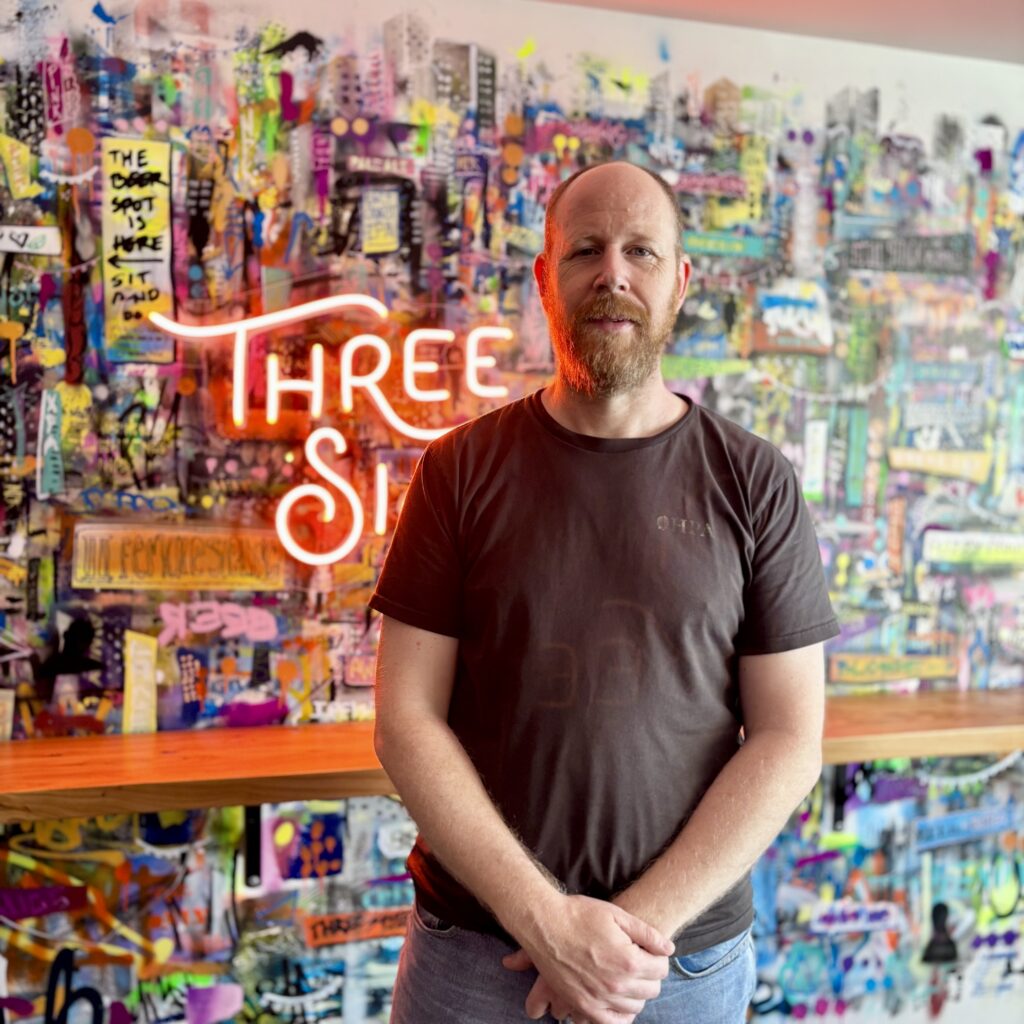
“It’s a really nice bit of equipment and I’d love to fit it in if I could but the engineers here said ‘that’s probably a bit hard’. The venue here isn’t quite big enough on a number of levels, on the utility side or the space side.
“I thought about it again and wondered that if he was selling all the gear anyway, maybe he’d take a good offer.
“When we first got in touch with him about a year ago, their expectations were probably higher and our cash position was not as good. Now we’ve got this bit of cash in here, so maybe they’ll take a better deal, and it turns out that they would.”
Emans said the synergies between the two breweries were too good to overlook.
The Gisborne site is set up for volume production which is great for Gisborne Gold and other core range beers like the Pipeline Pilsner, but not so good for seasonals as they can’t do smaller batches.
Three Sisters in contrast can’t do big volumes as they’ve got only a 600-litre brewing capacity.
“They can effortlessly produce volume and we thought there’s good synergy here, because we’re actually more set up for the small-batch seasonal stuff, just pumping out lots of different beers.
“So we will do volume for both brands over there, and seasonals for both brands over here.”
He notes that there’s now three bars to sell across — New Plymouth, Three Sisters new bar in Wellington and Sunshine’s taproom
“The Sunshine Bar has got about 20 taps but they are struggling to fill them. And Three sisters offers a variety of beers — smoothie sours, pastry stouts, non-alcoholic — that Sunshine don’t make.”
As Joe notes, his smoothie sours reach a wider audience, particularly popular with women.
“So straight away we can put on two or three smoothie sours, a ginger beer, and a low-alcohol beer. And we can have Gisborne Gold and a couple of their other beers in our two bars.”
The deal is perfect for Three Sisters as the export quantity they needed to send to China had forced them to drop other popular beers.
“We have struggled to produce volumes of popular beer like Oakura Blonde, Rain In Face, Fuzzy Panda, and S’up Bro. We’re just not getting to make them. Before we started going so heavy on the smoothie sours for export, we would sell about 100,000 litres of all that beer, and then we haven’t got around to any of that for four or five months.
“We should be able to get another 100,000 litres out of Sunshine almost straight away. And I think we’ve probably got a higher profile now than we did a year or so ago when we were sort of producing that, so we should be able to sell it.”
The export beer will also be made in Gisborne, with Emans saying that site is better for loading containers.
And it looks like Sunshine beers will also be exported.
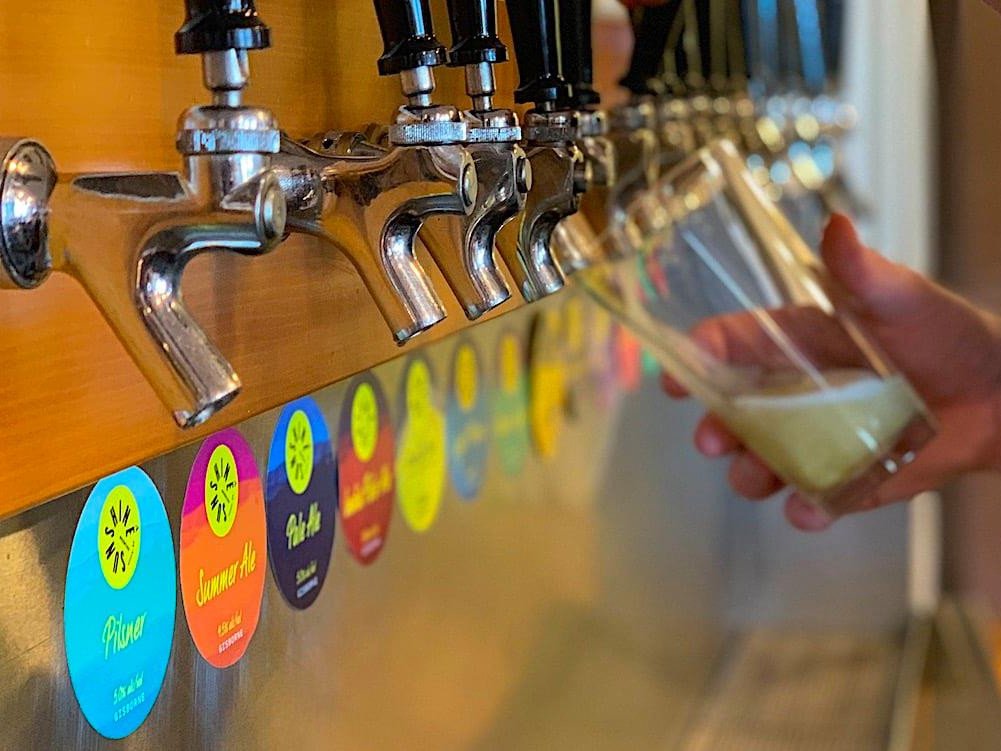
“We did ask our distributor, would they be interested in distributing Sunshine as a brand, and they were quite keen.”
Emans said his biggest problem will be keeping the brands separate and distinct.
“The plan is very much to keep Sunshine as Sunshine over there. And we’re just going add Three Sisters beers that I don’t think we’ll ever make under a Sunshine brand — the smoothie sours and pastry stouts — but I’m wanting to keep the brands identities separate, and to stop a diffusion between the two. I don’t want to have two sets of recipes brewed under different labels.
“I want to lean into the points of difference — they seem to focus on lagers and pilsners — their house yeast is a lager yeast whereas we’re a lot more ale-yeast driven over at Three Sisters. So, it makes sense to drive that separation a bit more.
“It will be a bit of a challenge, trying to keep the brands distinct and not end up with the same set of beers, it’s something we just need to be very aware of and work on.”
The Sunshine team will stay as it is, said Emans.
“Everyone who’s over there is just going to stay intact as a team at this point. I went over and met the team and we had a few beers and I thought they were a great bunch and there was a lot of enthusiasm coming from them.”
For his part, he acknowledges the responsibility that comes with being the owner of the oldest independent craft brewery in the country.
“Yeah, that’s a big deal and I’m very proud of being able to do this. I do love Gisborne Gold, I will often drink it if I see it. It’s nice to have a beer like that that’s been made in one town for nearly 40 years.”
