Brewing has been part of my life for 25 years now and even in this small amount of time, the innovations and experimentation that have all come about in the name of beer never cease to amaze me. It also means it’s almost 20 years since I first got the chance to get some freshly harvested hop cones and begin to figure out this interesting iteration that celebrates harvest.
We can trace fresh hop beers in New Zealand back to Mac’s Brewery in 2006, where then head brewer, Colin Paige, created Brewjolais and slowly the idea of using those resinous, sticky, aroma-laden cones fresh from harvest permeated the subconscious. Fast forward a few years and we’ve come a long way… both in picking up the skills needed to execute these brews and with the concept of celebrating the freshness of harvest; of capturing the taste buds of beer lovers up and down the country.
In some ways, brewing a batch or two once a year with an ingredient that is heavily reliant on its freshness and the ability of the brewer to balance the final beer is somewhat of a challenge! We’ve come a long way from the early days of fresh hop, when the logistics of getting these little cone-like flowers (strobiles) from field to brewery was always a gamble, particularly for breweries that were far from to the top of the South Island!
But with our hop growing terroir now including places like Taranaki, Southland, Canterbury and Hawke’s Bay, breweries closer to these regions have an opportunity to get something a bit closer to their doorstep. Hop growers have also honed their storage and transport techniques to ensure freshness.
why do the fresh hops need to be used so quickly?
The hops are usually picked, kilned and dried prior to turning into hop pellets, which are quickly pelletised and stored to capture as much of that freshness as possible. The kilning process acts to remove moisture as quickly as possible without impacting the delicate oils and compounds that reside within their aroma-laden lupulin glands. These hops, in their fresh form, still contain all of that moisture, meaning how we use these in brewing changes dramatically.
Extra moisture means extra weight, so when brewers devise their fresh hop recipes, this is the first thing that needs to be taken into account. Fresh hops can be added to either the hot side of the brewing process or the cold side. On the hot side, often this is by using the mashing vessel as a dedicated hopback: fresh hop flowers go in and the hot wort is back-added to the mash vessel to provide an infusion. Using them on the cold side of the process involves adding mesh bags of the freshly picked hops into a fermenter to allow the aromatics to infuse the beer, similar to dry-hopping.
Addition rates are generally 4-5 times the usual dry-hop additions as the extra moisture needs to be taken into account. With all of this extra volume, brewers end up with a lot of green material in their brew! This green material means that polyphenols and chlorophyll are usually amped up! And this is where brewing skill comes in.
Polyphenols can result in some astringency when not balanced correctly with the rest of the recipe and chlorophyll can come across with an overly green and grassy taste if steps aren’t taken to keep this in check, so these are two factors that can be more important in fresh hop beers. The flipside to this is that there is an inherent resinous, oily attribute that fresh hops can provide and this often works well to balance the greenness.
what do we look for when tasting these seasonal delights?
First, we need to remember that these will smell and taste slightly different to your standard hoppy brew! Think of it like cooking — if we have a recipe that calls for a cup of fresh parsley, we know that the flavour and intensity that we’ll get from that is a stark difference to dried parsley. The amount of a dried herb is usually a lot less than when we are using fresh so we can expect a different outcome.
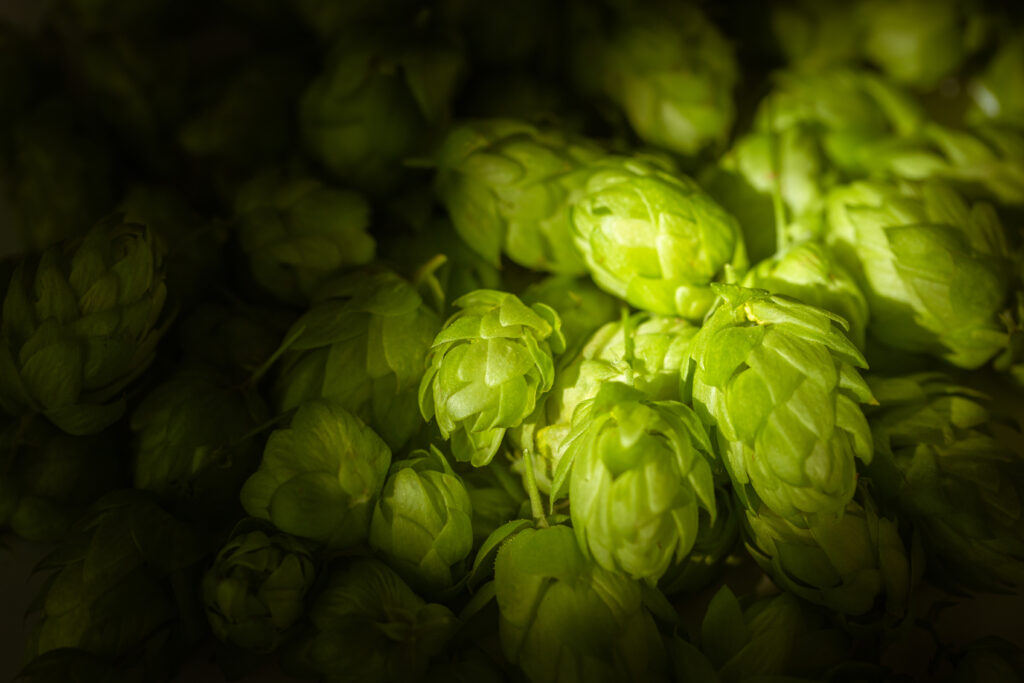
A fresh hopped beer should have a bright, intense and bold hop character. After a few seasons in the world of hops and really learning the nuances of how the hops progress in the fields during harvest, there is nothing better than bringing your nose up to a fresh hop beer glass and being transported straight back to the fields. There should be a vibrancy, usually presented as a mixture of citrus, tropical notes, intense gooseberry or passionfruit and always with the constant hum of chlorophyll and a pleasant grassiness. Nothing over the top, as if the brewer gets it wrong, you can end up with a glass that may smell like sun-ripened grass clippings, but this nuanced flavour is a reminder that you’re drinking something that has come direct from the land. No processing, no drying to cause any changes to the aromatic profile, but enough to remind you that these beers are different.
Fresh hop beers can also have a few interesting changes in their body or mouthfeel, with the extra polyphenols that are drawn from the hops in the brewing process often providing more texture and structure to the finished beer. The extra hop material that is needed for these beers can also have a positive effect on the beer foam. Foam is essential for holding those wonderful, hoppy aromatics within your drinking vessel of choice, with every sip breaking that layer and allowing those fruity characters to flood the nose. We know that hop compounds interact with proteins to provide a stable foam. So a good froth is something to savour in your fresh hop treats!
The great thing about being able to use hops in this format is that brewers can get creative. Not only do IPAs, Pale Ales and Hazy styles get the fresh hop treatment, it can mean more malt-driven styles like red ales or English bitters may get the fresh-hop treatment, or you may find a refreshing, tart sour style that is brimming with citrus intensity from a liberal fresh hopping. This is a time to try something new and look at how this style of hopping can present in differing formats.
So make sure you hunt out some freshies. A true celebration of the glorious hop!
WHAT HOP DOES WHAT
Nelson Sauvin
When picked earlier in the harvest window, expect some bright Sauvignon Blanc, bright passion fruit and that trademark fresh hop greenness. Although hops don’t add an inherent acidity to a brew, I find earlier and some mid-harvest Nelson Sauvin beers to have an almost citric twang that highlights the classic hop field aroma. Later harvest Nelson Sauvin presents bold, with big grapefruit, heavy tropical and ribes notes and sometimes an almost cannabis-like resinous scent.
Motueka
This lemon-lime zested chameleon always brings the brightness of fresh hop beers to the party. Early and mid highlights its zestiness, sometimes you may even get that classic floral note that belies this hops Saaz ancestry, but it is the later harvest Motueka where tropical fruit begin to shine. Hidden beneath the citrus you can get a sweet mix of guava and papaya that always impresses.
Riwaka
Riwaka is usually picked as a mid or late harvest hop and the later harvest Riwaka fresh hopped brews are usually brimming with bold passion fruit, mandarin and fresh grapefruit aplenty. These hops always pack a lot of punch, but the key here is balancing the intensity. Too high and some of those tropical compounds can tend overly ripe, but a perfectly brewed fresh hop Riwaka beer is one to behold.
Nectaron
With its heady mix of ripe peach, a tropical medley and the aromatics of a fruit cornucopia, Nectaron is great for bringing the juiciness to the party. The later picked can become intense and resinous, with an element of peak ripeness that is bold and punchy. Mid harvest lots tend to be more refined, but one thing that always fascinates me with this hop is the scope of aromas it can relay. Later harvest brings in a characteristic sweet grapefruit character and sometimes hints of nectarine or plum.
Kelly Ryan is Brewing Solutions Specialist at Freestyle Hops