Nick Calder-Scholes the Kiwi brewer behind the phenomenal success of Sydney’s One Drop is now head brewer at the just-opened People People Brewing Co. in Singapore. He talks about his global journey.
Nick Calder-Scholes spent his teenage summers in Nelson picking blackcurrants destined for Ribena cartons. Little did he know that one day he’d be ordering hops grown on the same land for beers he brewed at One Drop.
“I was born in Nelson and grew up in Stoke. Dad worked with the McCashin family a little bit, which is kind of like my first foray into ‘what the hell are hops?’.
“And we did a lot of traveling over the Golden Bay for holidays and we’d drive through Motueka and past Riwaka and over the Takaka Hill where you have that amazing view of the orchards, but also the hop farms. And I’d be like: ‘what the hell are they, Dad?’
“My brother, who’s quite a bit older than me, came back from London one year and got a job on his mate’s farm, picking blackcurrants as a summer job, and I helped out there too. This was the Eggers family farm; one my brother’s best mates is Kem Eggers.
“At One Drop we use a lot of hops from Eggers … so little did I know that when I was paid under the table as a 13-year-old, listening to punk rock and picking blackcurrants that I would be going back there year after year at harvest and be showing brewers from all around the world these beautiful hops that Kem’s growing in the same soil.”
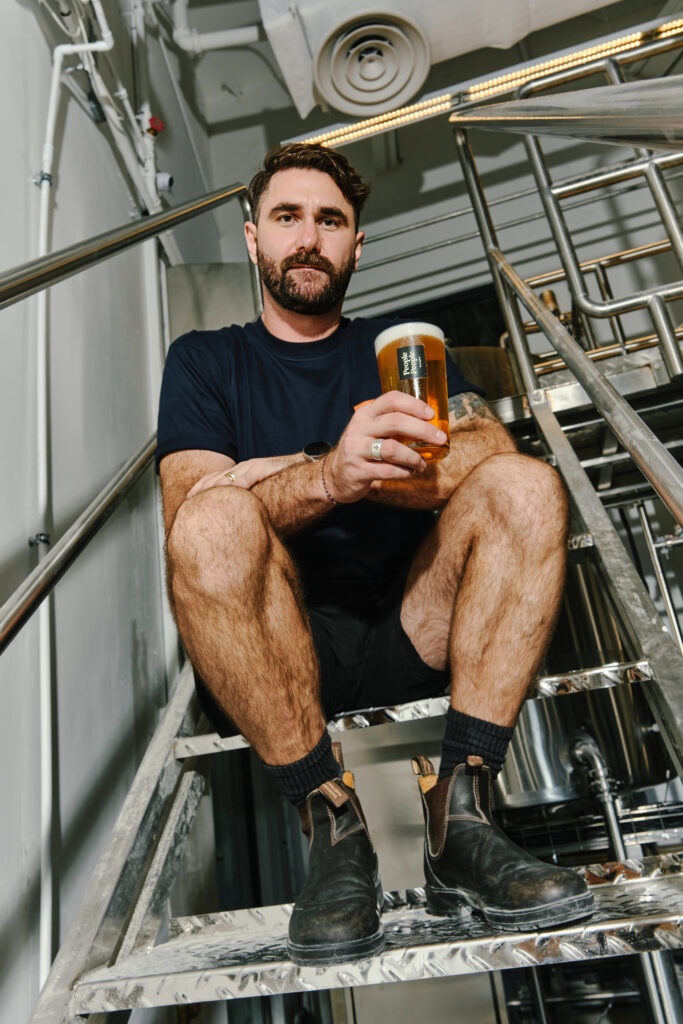
Homebrewing in Perth
Nick’s journey to brewing started with home brewing in Perth and a chance encounter that would later change the direction of this life for good.
Working in hospitality he was at a bar that served a lot of craft beer, sparking his interest in home brewing.
His flatmate at the time opened their doors to his sister and her partner, who needed somewhere to stay for a few months. When the discussion turned to Nick’s home brew, he got a quick lesson from a man destined — like Nick — to be highly-regarded in the brewing world.
“I was like, ‘oh, I’ve got this homebrew kit — you just pour syrup in’. And he’s like, ‘yeah, look we can do these other things…’ I’m not sure I should say this but we permanently borrowed some kegs from out of the back of a pub and turned them into an all-grain brewing kit.
“John was a marine engineer and I was this crazy guy coming up with ideas; we did that for about a year and a half.”
Those brews inspired Nick to get a brewing qualification through the Institute of Brewing & Distilling (IBD).
“I thought ‘I’m qualified now, someone in Perth will hire me’. And everyone’s like, ‘how much experience have you got?’ ‘None, but I’ve done this course and I’ve done it with flying colours’. And they were like, ‘yeah, good luck, buddy’.”
At that point, John had moved back to England and Nick set off on a global adventure where he tried to travel from Indonesia to London without catching a plane.
From Morocco, he called his old home-brewing friend in London looking for a bed.
“I called up John and said, look, I’ve been travelling for 13 months. I’ve been stuck in Morocco for three of those. I need to stay on your couch. And they were like, yeah, of course.”
John, JT, or John Taylor to give him his full name, was working at the soon-to-be darling craft brewery Fourpure.
“He’s like, come and work on the canning line.”
London calling
Within a year, Fourpure had grown substantially and it didn’t take long for head brewer John Driebergen to offer Nick a job as a brewer where his creativity was let loose on the pilot brew kit.
“It was an incredible year of going from scraping by on 5 euros a day in Morocco to me and my mate, who I did homebrew with, running this pilot brewery. It was awesome, man. All I ever wanted was someone to drink my beer on tap.”
When the first keg sold out he said to JT: “My career’s peaked. It can’t get any better than this.”
He lived and breathed beer in that period learning as much he could.
“I never went to uni, so I decided I’m just going to study on the weekends … It was a formative year in brewing and I can’t believe it was just a year. It feels like three or four.”
From London Nick got a job at Garden Brewing in Croatia where he met a fellow Kiwi, Clay Grant, and his partner Meg Barbic — the future co-founders of One Drop.
While visiting Meg’s family in Croatia, when One Drop was still a dream, Clay decided to check out a brewery he’d seen on Instagram. He met Nick and convinced him to be come to Sydney as the head brewer of a brewery that didn’t even exist at the time.
Sydney via Croatia
Nick’s time with One Drop needs little explanation — it’s a cult brewery renowned for their ridiculously fruit-driven, brightly coloured smoothie sours and intense hop bombs. Nick’s creativity reached extreme levels at the Botany brewery and he even came up with a unique hopping technique dubbed cold fusion.
He was named Australia’s brewer of the year in 2024.
But the creative energy required to keep innovating, plus the hard work of brewing, was taking its toll.
“One Drop was this beautiful thing — a massive hub of creativity, and I think you can talk to a lot of brewers who are seven or eight years into the game and they’ll tell you the same thing, creative fatigue is a real thing.
“My back isn’t getting any better and I guess I was wondering where this career gets me in ten or 15 years,” Nick says.

He was thinking of moving out of a day-to-day brewery role when he got a message from Dave Pynt, the Australian-born chef behind People People.
Perth-born Pynt launched the first Burnt Ends in London, before moving the barbecue fine diner to Singapore in 2013. Once they started talking Nick knew it was an opportunity he couldn’t pass up.
“I am still connected to One Drop in my soul, because I really put a lot into that but also I wanted to pursue what I do love, which is projects and working with amazing people and getting awesome stuff off the ground that has its own creative element.”
One Drop, he said, was about customer-facing creativity, but with People People it was about building a brewery from scratch and designing beers for a different drinking culture.
“Here we’re doing awesome stuff but in different ways. We’re incredibly focused on getting the engineering and the recipes right to bring modern styles of beer to Singapore, but also keeping certain styles within tradition as much as we can. And that in itself has a creative element that’s different to One Drop’s customer-facing creativity.”
Singapore’s vibrant scene
The Singapore venture requires a different approach to beer. Despite its vibrant food and multi-cultural outlook, the beer scene is strongly rooted in European traditions.
“There’s a traditional style of brewing that people seem to enjoy, or at least that’s all they’re offered, right? That’s traditional lagers or Euro-lagers that aren’t the greatest. There’s a lot of wheat beer and all the West Coast IPAs are old school, with heavy crystal, heavy bitterness, lots of pine and resin. While I do like those beers, I don’t like them in this climate.”
His partners in the People People, based at Resorts World Sentosa are Pynt, Pete Thew, brand builder and hospitality entrepreneur; and Jason Moy, brand and consumer strategist.
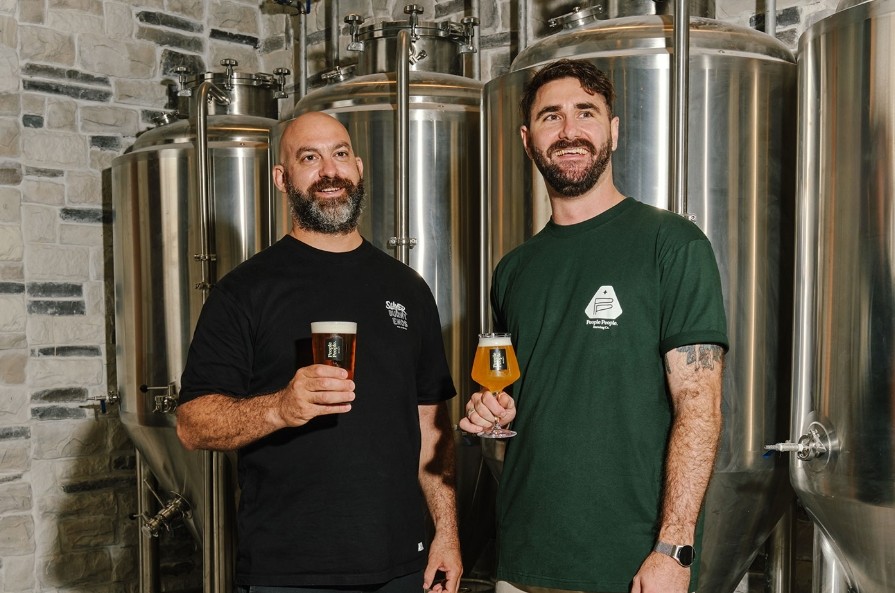
“When I was brought on for this project I was talking with Dave, who is massive sensory, ingredient-led, customer-led guy, so talking with him about beer was just so easy. We do talk a similar language, even though it’s a different product. And I was like, look, I think there’s a market here to bring more modern beer.”
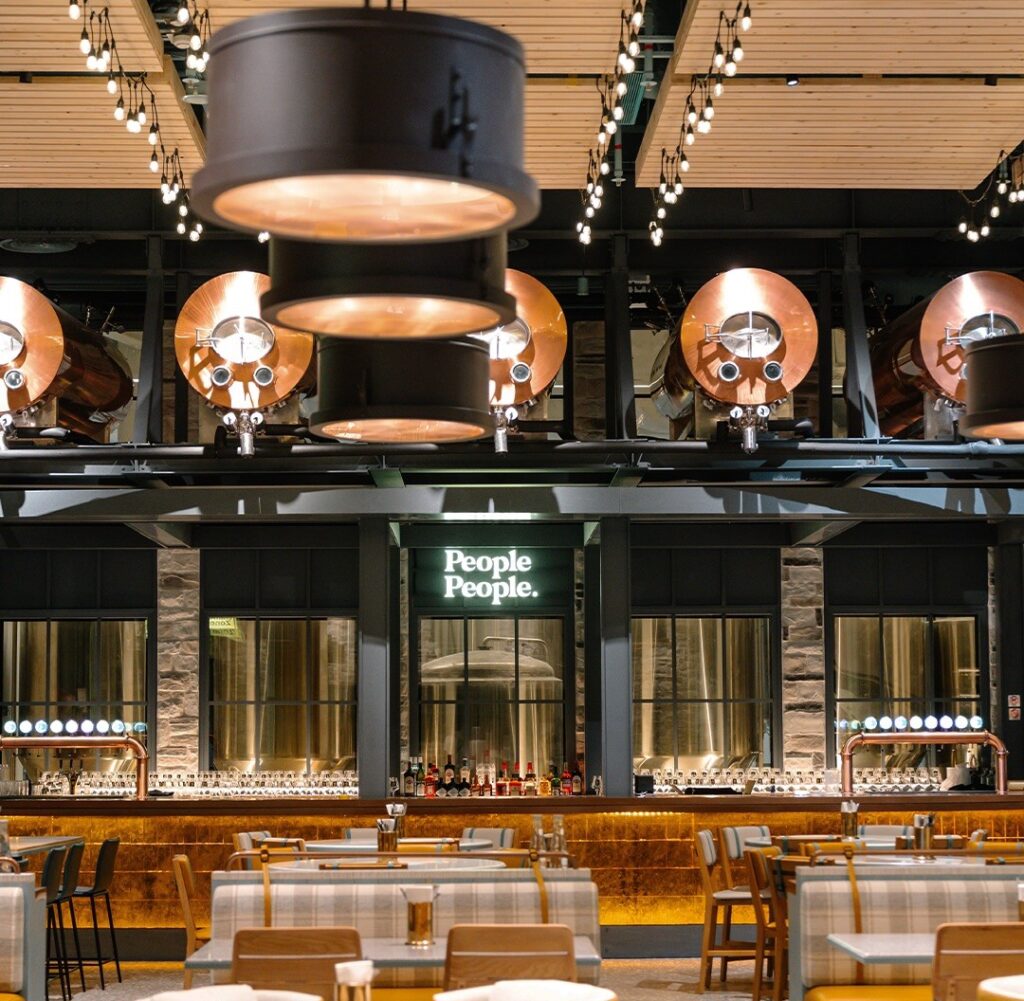
But in doing that he didn’t want to lose sight of tradition. To that end they’ve built a brewery that wouldn’t be out of place in Europe with five copper horizontal tanks attached to the roof above the bar, and a brew house that can handle a double decoction mash. Lukr taps at the bar complete the hardware side while Nick is determined to source Czech-style lager ingredients directly from Czech farmers. “Because that’s provenance, that’s knowing your ingredients.”
Another tweak is on the popularity wheat beers.
“The idea is, let’s get rid of pale ale, let’s morph it into the wheat beer and do it as Pacific-style ale and use these new hops coming out of New Zealand, like NZH 109. I want to create styles that the area already knows, but use modern techniques, modern equipment, modern ingredients.”
I am still connected to One Drop in my soul, because I really put a lot into that but also I wanted to pursue what I do love, which is projects and working with amazing people and getting awesome stuff off the ground that has its own creative element.
Nick Calder-Scholes
The IPAs will go lean and hoppy rather than malty and bitter.
“My philosophy was not to come in and go, ‘hey, guys, you’re doing it all wrong’. I just want to bring in what I’ve learned over the last 10 years and create a modern refresh of what people are used to. Is that going to change beer culture in the region? Probably not.”
Does this mean there won’t be any of the smoothie sours he’s renowned for in Sydney?
“I’m being very frank with everyone here that that’s not something going on the core range. We’re going to do a couple of sours and we’re going to do them in that kind of older Berliner Weiss style — ferment on the fruit and integrate that flavour to begin with.
“We have a small 500 litre pilot kit where we’re going to reserve for out-there collaborations with chefs, brands, winemakers, other brewers, for small events in the brewery or events through the Burnt Ends Hospitality Group. The smoothie sours will be reserved for those, super one-off events to say, this is kind of our flex, this is what we can do.
“Or if there’s a beer festival on in Singapore, we can come along and do something really out the gate. But are we going to build our brand off it? No, we’re not.”
In terms of the wider beer scene, the news when we spoke, was all around Tiger shifting production out of Singapore, coupled with Heineken’s view that it doesn’t matter where the brand is brewed.
“That’s exactly what someone who doesn’t touch the product would say,” Nick says.
“But provenance, where it’s made and how it’s made, are critical. And a lot of people don’t care, right? They’ll still drink Tiger, it doesn’t matter. But the people who do care — the people who care about what they eat, what they drink, what they put in their body, where it comes from —are the people we’re going to speak to. And that’s why we’re building what we’re building.”
At this point, we’re almost back to the start of the conversation and Nick reminiscing about his father’s relationship with Mac’s, a local brewery that ended up selling to Lion.
“I guess that kind of ties in, in terms my upbringing in Nelson. When Mac’s got bought by Lion, Dad switched to Monteith’s.”
(Nick points out that his father, like many, didn’t realise that Monteith’s was owned by DB!)
And not just that, his dad wanted only the Monteith’s beer brewed in Greymouth, not Auckland.
“Every time he went to New World, I would help him look at the labels to find the ones that were still brewed in Greymouth.
“Dad was never a craft guy. Dad was a ‘buy some beers and drink them on the weekend’ guy. But he cared enough. It was enough to say I want to support local. Not that he was supporting independent at the time, but for him it was the attitude that the best I can do is at least buy a better product, and that I know where it’s from.”