This is the fourth part of a series dedicated to breweries that have opened up since the Covid-19 pandemic. The past five years have been tough for those in the brewing industry. The data is there: higher costs, lower consumer spend, alternative drinks. All are eating into beer’s share of the beverage market. Despite the doom and gloom a number of breweries have started in the past five years. In this series we visit six from the length and breadth of the country. They are all slightly different but if there was one common denominator it’s that they’re all trying to control their own destiny in one way or another.
Alchemy St — Opened February 2024
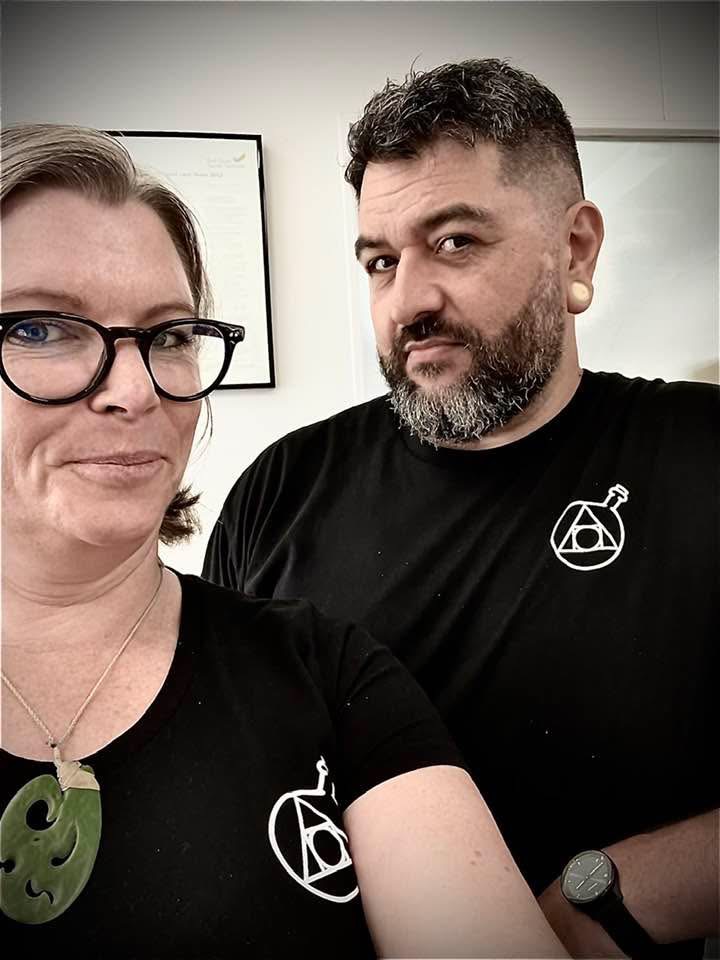
Ed Bolstad and his partner Kat did the hard yards in West Australian mines to build up the nest egg that’s helped them launch Alchemy Street.
Ed, who has a degree in chemical engineering, and Kat, who trained as a physio, came back to New Zealand in 2015.
“We came back home to be close to parents but from living over in the mines in WA, we managed to get a head enough so that we could come home and look to do what we wanted to do as opposed to chasing wages.”
Kat retrained as a hand therapist and Ed decided he wanted to brew.
“I’d been home brewing for a long time. All the boys in the family home brewed — it all started from when Dad used to make the world’s most horrible beer back in the 70s and 80s.”
On his return home he wanted to register a brewery called Alchemyst but found someone had taken that name the way Ed wanted to spell it, with a Y. So he split the “st” of the end to create Alchemy St.
When Kat, as part of her training, got work as a hand therapist in Christchurch Ed did his “adult apprenticeship” at Cassels.
He was about to take a job at Kaiser Brothers when Covid hit.
“The job disappeared and suddenly I was unemployed and ineligible for government subsidies.”
Post-Covid the couple moved back to Tauranga to be nearer their respective parents.
With no brewing jobs on offer, Ed reanimated Alchemy St and started contract brewing, at Slab and Lumberjack.
He gambled on a niche focus, fruited sours in summer and adjunct-heavy dark beers in winter, figuring those would be easier be to sell as a point of difference rather than trying to compete with hundreds of hazies, pilsners and IPAs.
“I decided to do ones that weren’t as common just to try and get noticed. Those days was more about creating a brand than making any money. And getting to know people.”
The first two years of owning a brick-and-mortar business is always going to be the hardest. And we took over a hospitality business in a recession when hospitality is getting absolutely smashed.
Ed Bolstad
He also fostered relationships with other breweries, especially around the Bay area and would often sell other’s beer alongside his own.
“I’d quite often get bars saying ‘yes, we’re quite keen on this sour or this dark beer, but we don’t want to have a whole lot of different ones. What else have you got that’s, you know, more traditional craft beer that we can add onto the list?’
“And I’d say, look, I don’t have anything, but I have good relationships with this brewery, this brewery, or this brewery. Here’s what they’ve got. You choose one of those and one of mine and we can share the freight cost between myself and the other brewery.”
Slab was one of those.
“And they’d say ‘do you want us to pay you?’ And I said, ‘no, no, no, you don’t understand. By moving one of your beers, I sell one of my beers.
“Realistically, I was doing it for myself but at the same time, you know, many hands make light work. That’s my attitude to a lot of things in life. Be helpful and assist everyone, and you get on well.
“And that’s what I’ve found mainly with most of the industry. Everyone’s very supportive and helpful.”
Taking over Slab
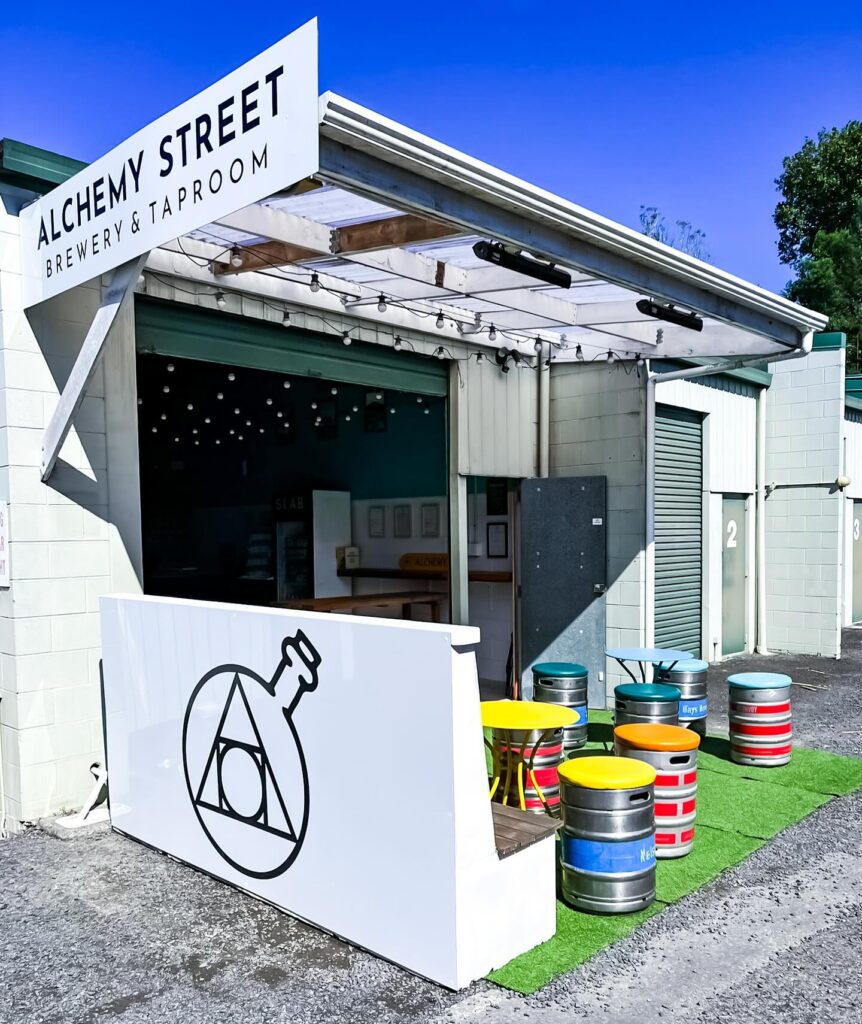
When the owners of Slab decided to exit the business in early 2024, Ed took the chance to give Alchemy St a bricks-and-mortar home.
“Because we are so small we don’t have staff, it is me doing most of it, and then Kat comes down, and on a Friday to help out at the bar.”
He has a 300-litre brew kit and three 330-litre tanks and three 880-litre tanks. “I double brew into the 880s and I have them running nonstop.”
He did notice a slow down over the past winter.
“Honestly, we’re lucky that we don’t have a staff because we don’t have to pay wages. And we’re in an industrial area so our rent is manageable. I couldn’t imagine trying to be on a high-rent, high-traffic area, paying wages as well.”
Ed admits it’s been tough but has “not a single regret”.
“We could afford to do this is because we’d spent that time overseas and one person working full-time is enough for us to live, so we could put money into this. We haven’t gone into debt, but we haven’t made money from it.
“The first two years of owning a brick-and-mortar business is always going to be the hardest. And we took over a hospitality business in a recession when hospitality is getting absolutely smashed.
“But if you can come out the other side, a) not burnt out, b) not broke, c) not in debt, yeah, you’re doing well. And then you’ve just got to build on what you’ve got and go from there.”