In this new series, sponsored by Gladfield Malt, we look at the ways malt can make a beer shine.
Garage Project Garagista
“People say, what’s your favourite beer? And I’m like, well, you know, you can’t say your favourite beer because it’s like saying your favourite child. But quietly, to myself, I’ve got to say Garagista is definitely one of my favourites,” says Garage Project co-founder Pete Gillespie.
Garagista IPA has a special place in Pete’s brewing heart because it’s so different to modern IPAs, which are often brewed on simple pilsner malt, and different again to hazies which incorporate oats and wheat.
Pete started his brewing career in England where “malt is fascinating and far more of a component in brewing”.
In New Zealand, he says: “Malts, weirdly have taken a backseat in a lot of craft brewing. Hops are the megastars — they are cool and they have so many big, brash, bold flavours, but malt is so important.
“The actual soul of the beer is the malt and the hops are the flashy stuff on top.”
When he started GP, Pete wanted to use his favourite UK malt, Optic, but found it didn’t travel well.
“It’s tyranny of distance — this stuff turned up, and it was just not the same. It just lacked something.”
He opted to use local malt but was initially sceptical when he looked at Gladfield.
“You know, a Canterbury farmer decides to malt grain, and I wasn’t sure … but they have absolutely won me over and we are almost exclusively Gladfield now — freshness trumps everything.”
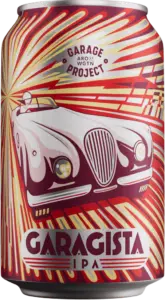
With Garagista, the beer is about of “lots of hops and lots of malt”.
“There’s substance to it. There’s a lot of hops in there and it’s punchily bitter, but with the juicy malt. There’s a reason people brewed beers like this, because that kind of like chewy base with all of those hops creates a real Seville orange, juicy, mouth-watering, sweet and bitter balance.”
The beer is brewed with ale malt, light crystal and medium crystal and hopped with Mosaic, Kohatu, and Vic Secret.
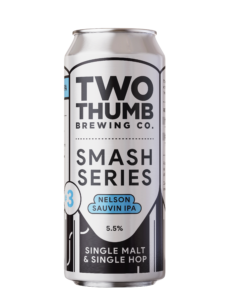
Two Thumb SMASH Series
A single malt, single hop beer is one of the simplest offerings a brewery can make, but anything that sounds simple, usually isn’t.
Two Thumb’s SMASH series features three single-hop, single-malt IPAs, with each built entirely on Gladfield’s American Ale malt.
Brewer Alex Grimshaw says the beer is designed to showcase what happens when premium local malt is given the space to shine.
“By using a single malt base, we’ve created a beer that’s clean, golden, and expressive, with every element precisely tuned to bring out the best of its raw ingredients.
“American Ale provides the perfect balance between fermentability, colour, and flavour, sitting neatly between a classic ale and pilsner malt. The result is a soft, bready malt character that delivers both depth and drinkability, with just enough body to carry assertive hopping while finishing clean and crisp. It’s this combination of clarity and texture that makes it such an exceptional solo malt.”
Alex says the American Ale malt has “inherent balance”.
“Its composition offers a stable enzymatic backbone, excellent attenuation, and a subtle sweetness that allows the hops to sing without overshadowing the malt structure with something more roasted. The result is a beer that’s layered, yet uncluttered.”
To get the most out of the malt they adjusted their water profile, using elevated chloride levels to enhance the fullness and roundness of the malt, while higher sulphate content helped with crispness and lifted the hop aroma.
Hops still play a part and Two Thumb went locally to Bold River Hops, in North Canterbury, going with Nectaron (passionfruit and pineapple), Riwaka (sweet citrus, dank) and Nelson Sauvin (white wine) for the three beers.
Fermentation was handled by US-05, chosen for neutrality and reliability.
“This beer also ties deeply into our ethos of local provenance and precision brewing. Both the malt from Gladfield in Dunsandel and the hops from Bold River are grown less than two hours from our brewery. That proximity isn’t just about reducing our carbon footprint, it’s about celebrating Canterbury’s world-class brewing agriculture and building a beer that speaks directly of where it’s made.”
Altitude Brewing Mischievous Kea
Eliot Menzies had a problem — how to modernise the brewery’s flagship Mischievous Kea IPA without losing its connection to the past.
Mischievous Kea started life as nod to two of Eliot’s favourite beers at the time, Parrotdog Bitterbitch and 8 Wired Hopwired. It was designed as New Zealand-style IPA with a nod to England.
The original version used Gladfield’s Ale Malt, some Munich and lots of crystal malts — light, medium, and dark — as well as chocolate malt for colour.
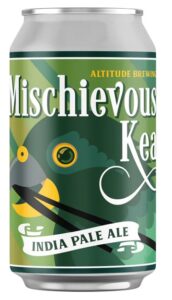
At a lower ABV of 5.5%, with some residual sweetness, a classic of Motueka-Nelson Sauvin hop combo it was a balanced beer that was both malty and hoppy “and a bit more English in its character — a little bit chewy, a little bit toffee-like.”
As beer modernised, Mischievous Kea needed to adapt but without losing the regulars who drank a lot of it.
“It had become pretty old-fashioned as drinkers’ tastes changed and I think our education as brewers had evolved as well.”
And using a large amount of crystal malt also meant the beer showed its age when it sat in cans for too long.
A newer malt from Gladfield called Supernova solved the problem.
The base is now a mix of American Ale and straight Ale, the Munich was reduced and Eliot took out all the dark crystal and light crystal, replacing it with Supernova.
The new malt bill created a fresher, drier beer and also helped the hops present better but it retained the chewy, nutty, toffee character that had won over so many fans. The reduced crystal malt content meant the beer had better shelf stability.
“And we had no comments when we changed it.”
Supernova was the key, he said.
“I think it’s a brilliant malt. It’s the perfect malt to allow us to get a drier more modern finish while still retaining that caramel-toffee quality. So, it’s still retained the English-style IPA qualities, but it drinks fresh and lively and vibrant.”