At 15, Wellington’s Parrotdog stands out among New Zealand’s independent breweries — as a business actively moving away from its owners.
The path of most small breweries is built on the owner-brewer model — and even when growth comes the founders continue to be the face of the business even if they’re not on the tools as much.
Even Emerson’s, 14 years after selling to Lion still have founder Richard Emerson as the face of the brand.
Parrotdog built their reputation on the “three Matts” — Warner, Kristofski and Stevens — who founded the business in 2011 on the back of their cult beer Bitterbitch.
Today, Kristofski and Stevens remain major shareholders and directors but they no longer work in the business, both relocating to Nelson with young children to be near family and follow different careers.
Warner remains as brewing director and Paul “Wattie” Watson, who joined the business as the first employee, is now managing director and part-owner alongside the vast number of shareholders who bought into the brewery over a series of crowd-funding capital raises.
“It was essentially just the four of us for a decent amount of time and we’ve had a wild ride,” Wattie says, reflecting on 15 years. “But what sticks out the most for me is the transition we’ve gone through.
“That first decade was such fast pace. It was phenomenal how quickly things were moving. And then we’ve been steering the business through this transition phase over the past five years, out of being founder-led and into something that can be semi-independent. Myself and Matt Warner are still in the business, but that’s not out of necessity. That’s because both of us want to be there, but the goal has always been to set up the business to be independent from those who started it because we felt that was always going to be limiting.
“I remember with Matt Kristofski saying just that in the Vivian Street days. From the outset, he was like, ‘we’re never going to make this brand centered around the people, around its founders, because it’s so limiting’.
“Matt Warner and I still feel very strongly about that, so if he or I left or something happened to us, the business would continue. And it was always about letting the business stand on its own two feet, irrespective of who ran it, who owned it.

“The real reward has been to come out of the blocks running so fast for 10 years, and then transitioning this business — bringing on an amazingly talented leadership team and having them stabilise the business to a point where we have genuine trust and belief from our key stakeholders, our suppliers and people who, in the first 10 years ago, we might’ve had sort of semi-fractured relationships with as we were sprinting so fast. But just building those relationships and building that trust, including with the bank, to be fair, is probably one of the most pivotal things. That’s been a hell of a journey and relationship.”
The bank is an interesting one to credit, but Wattie notes that the BNZ had faith in the business when it was burning cash and is now supporting them as they build infrastructure.
“The BNZ supported our growth even when were on a fine line, predominantly in cashflow because we were just reinvesting everything into running faster. And that was very deliberate — that that was our intention. We wanted to come in and disrupt and move things very, very quickly and just capitalise on a market that was so frothy.
“We were playing that game aggressively. We were discounting, we were paying for display units. We were getting the brand in people’s face.”
Now that they’re a profitable business, the bank’s has moved from lending for survival to supporting growth through investment.
“We’ve stabilised the business and we’ve pivoted to profitability and we’ve strengthened our cashflow position and we’ve brought in senior leaders. And that’s where I’m quite excited about the next five years.
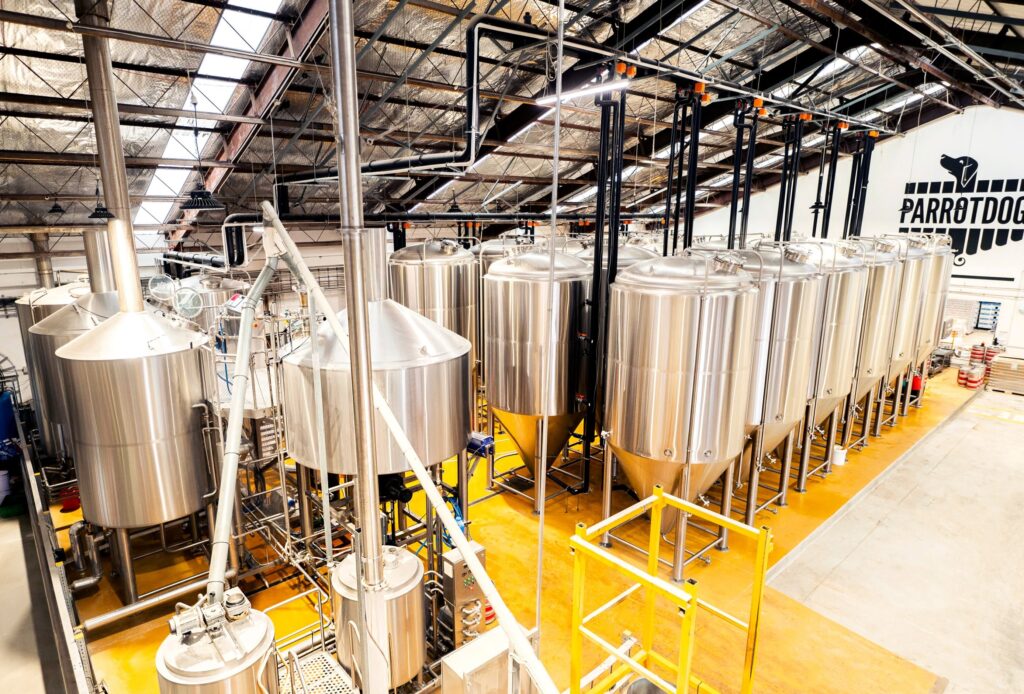
“We’re building the next layer of growth. Everything we’re doing, every single investment we’re making in the brewery is around our ability to scale up from here. We feel like we’re putting in that work now to allow us to launch, should the market sort of correct and we can go again.”
THRIVING THROUGH VOLATILITY
Of course that’s the big question: will the beer market rebound along with the wider economy?
“I’m not sitting here fairyland… every year we’ve been told it’s going to get better the next year. That just hasn’t come. I feel like there was the same discussion of green shoots this time last year. And then you just go around the corner and there’s the next geopolitical issue or the next major crippling of a particular supply unit or something like that. And it just another disaster that you’re faced with.”
As a result they talk about in the brewery of “thriving through volatility”.
“We’re just learning now that around any corner there is going to be something we’re having to deal with. And it’s been like that for several years. But we’ve done the hard work and if needed we can absorb things like rising the fuel costs for a period of time.
“And we’ve got the ability, the skills in the team to go, ‘OK, we don’t need to panic here, what’s our roadmap?’
“Whether or not the market bounces back, I don’t know, but we’re still managing to grow in a very flat market. And that’s what gives me confidence because I’m seeing more confidence in our ability to produce great beers at a good price.”
The latest hit for Parrotdog is the shock closure of Malteurop. Parrotdog were the largest craft customer of the France-owned malt supplier and now they have to look elsewhere.
“Yes, yet another semi-disaster on the horizon around our malt supplier, which obviously is a huge, huge risk to the business.”
But that’s where good governance comes in, he says.
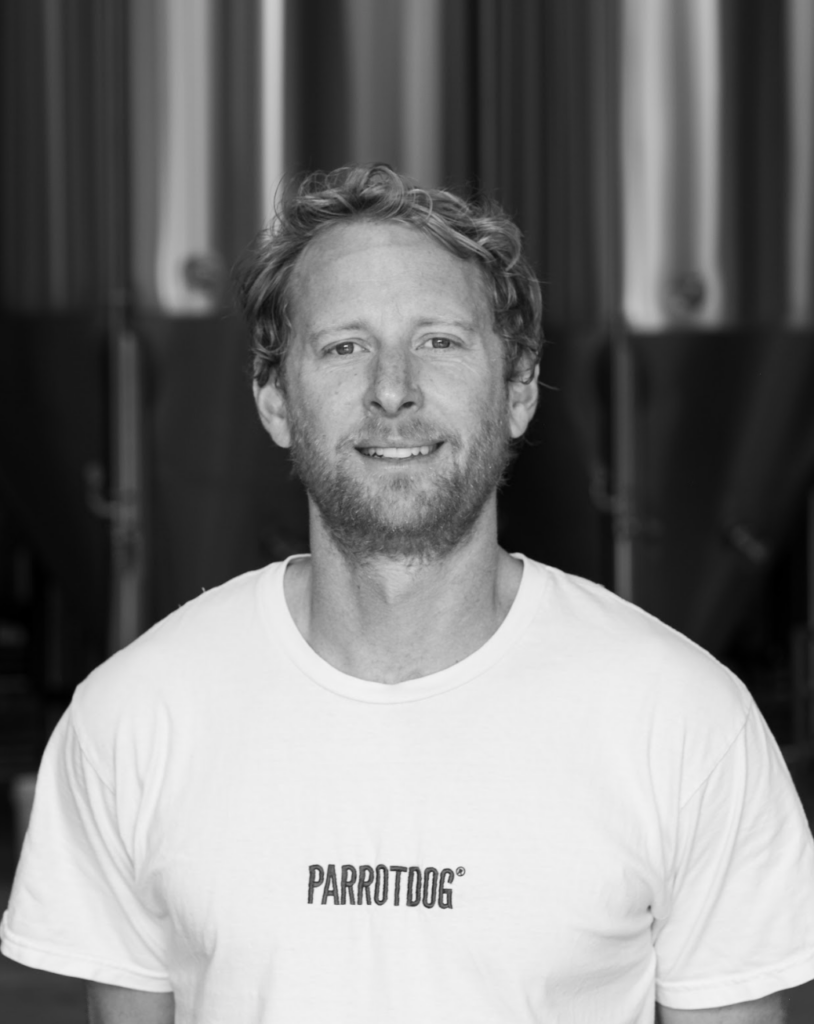
“Having a really engaged board keeps the management team honest. So in a situation like Malteurop, we notify the board, and the board’s coming back with questions asking us to lay out what the options are and telling us to get to work and put a decent plan in place.
“At the NZ Beer Awards in Dunedin we caught up with the Gladfield crew and had a very honest discussion around what supply from them would look like.
“They’re very open about wanting to win our business. Then we’ve got other potential suppliers that would mean importing from Australia, from Joe White Maltings, for example.
“We’re confident we’re going to a supply of malt. It just depends on, from a quality and price perspective, what’s going to suit our business. That’s what we’re working through at the moment.
“We haven’t actually landed on a definitive direction. We would like to keep it local if we can without having to rely on the uncertainty and unpredictability of import. But it’s largely going to come down to cost, but all parties are assuring us they’ve got the supply for us.”
Another problem for Parrotdog with importing malt is that they have a 30 tonne grain silo but it needs and extra piece of equipment to get malt out of a shipping container.
“It would require another investment probably for us and just another level of admin in that whole process.”
TRUST AND PRICE
Parrotdog’s growth, he says, is broadly based on two principles: brand trust and good price.
But they are also dealing with retailers who want to reduce the number of options on their shelves and that means some core range beers might be phased out over time, down to just five or six.
“The retailers are wanting consolidation. When the market was frothy, they would just accept all the new beers and they knew that they were going to move off the shelf because people were walking through the door to buy them, but that’s just not the case now.
“So they’re saying this next phase of craft is about a more consolidated range.”
A curbing of the core range doesn’t faze them as Wattie sees it as a chance to put more focus on the biggest sellers.
Parrotdog Birdseye remains the No.1 selling premium craft beer in retail.

“We’ve got the number one beer, the leading premium craft beer in the market. We genuinely believe if we focus more on Birdseye, we think there’s a decent amount of growth there.
“We’ve got Bitterbitch, which has such a loyal, solid following, although we don’t necessarily see the huge amount of growth there but it’s retaining its position as our number two beer. And then Raptor came out of the blocks and that was really successful and we’re seeing some good momentum in that beer as well.”
Yellowhammer Hazy Pale Ale and Sundog Pilsner round out their top five sellers.
“When we reflect on those top five and the value to the overall business, versus the next five or six … the tail is just so long and we’re seeing there’s less appetite for them on the shelf because the retailers just want to lead with the top five or six. And that’s a great number for us.
“If we can be a brand that’s five- or six-wide on the shelves nationwide, then that’s a massive result. So that’s where we should be focusing the attention.
“Over time, we’re going to start winding down the range. We haven’t pulled the lever on anything dramatically because there’s still revenue and sales, but there is a plan to see some of those slower moving SKUs dissolve over time. And a lot of that also comes down to how much packaging materials we’d already committed to. But the mission is, over time, to rationalise that range and just have a focus on that core volume that’s making dollars for us.”
Reducing the core range leaves room for more 440ml one-off releases and already Parrotdog are churning out those more regularly.
“We’re picking up the pace because the demand is there for those beers, big time. And that is one area of the market that we haven’t really seen die away too much in the last couple of years, which is really interesting because it suggests the craft beer people are still prepared to spend 9, 10 or 11 bucks on a single can: that market has stayed quite true.
“Because that market has stayed buoyant, we’ve managed to retain a level of demand where we can put out a limited release and they sell through without lingering too much.
“It’s pretty style specific. We certainly see that anything with a hazy and IPA will move through still bloody quickly. And then perhaps some of the either darker beers or some other styles, maybe not so much.”
Investment at Lyall Bay
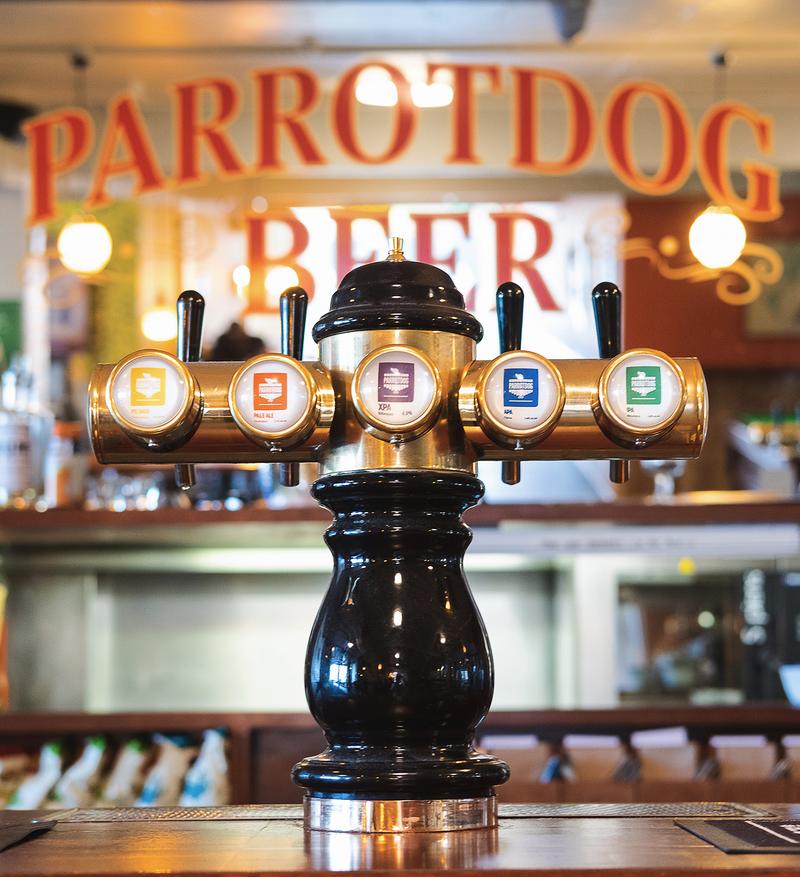
The next major investment is likely to be a renovation and upgrade to the bar adjoining their Lyall Bay brew site.
“It’s still an absolutely pumping place, and we feel it’s an iconic destination pub in Wellington.
“The problem is that we extended the bar around five years ago into the pottery studio next door but weren’t in a position to upgrade the kitchen at the same time, which has created a pinch-point with some long waits for food when it’s busy.”
They’ve had plans drawn up and are deciding soon on whether to invest further.
They’ve also just invested around $500,000 in a new rotary canning machine.
“It’s been huge, honestly. From a wastage perspective, just the efficiencies that machine will bring and from a quality perspective, we’re so excited from a quality perspective.”
It replaces two older machines that were working in tandem. Wattie notes that this is reflective of the bank backing them on investment and growth.
“We expect to own that machine for a long time and for it to deliver the quality and pace that we need to grow from here. And to that from a comfortable position is another really rewarding thing — we don’t feel like we’re stretching it.”
The next phase of Parrotdog is to grow into a beer business, rather than be seen as a craft brewery.
The difference is subtle but important. The growth is in reaching all beer drinkers.
“It’s quite a common among craft breweries now to want to dissociate from that word ‘craft’, so we’re not pigeonholed. And I think our Parrotdog bar is a real reflection of that — we have tradies, hi-vis vests, families, that whole spectrum, but if the craft geek walks through the door, there’s also something for them.
“I feel like the modern interpretation of beer is going to sit in this quality space. Yes, it’s expensive, but I think we’re obviously seeing the decline in mainstream beer,” he says, referring to a waning of an older generation of drinkers knocking back multiple bottles of 4% beer.
“Those mainstream beers don’t feel part of the future for me. People are drinking less, but they’re drinking a greater quality. I think that’s where our brand positioning sits going forward.
“I do believe there’s growth in this next phase. It feels like our purpose is bringing people together through the enjoyment of good beer.”