Urbanaut Brewing in Auckland are the first craft brewery to install a LogiCO2 carbon dioxide monitoring system to protect staff and patrons against a “silent killer”.
Urbanaut founder Bruce Turner said CO2 monitoring was on his to-do list when he started the brewery but because there are no regulations in New Zealand requiring monitoring, he let it slip until earlier this year.
What changed was a visit from Frans Bos of NZBS and the LogiCO2 team. Turner had known Bos for some time through the industry (Bos was a co-owner of another local craft brewery at one stage), and when NZBS began looking for a New Zealand brewery to serve as a flagship case study for LogiCO2, Urbanaut came to mind. The brewery’s mixed-use layout made it an ideal showcase.
Turner met LogiCO2’s Kristoffer Eklund Cuestas, business manager for Central and South America, Spain, Asia-Pacific, and Oceania, and Ross Olsen, business manager for the US and Canada, and together they identified the key risk points and mapped out where monitoring would matter most.
Looking back, Turner says the decision was straightforward. ”It’s like getting in a car and not putting a seat belt on,” he says. ”It’s the kind of thing that will ensure your safety. Why would you not do it?
“When I was in the UK brewing industry, CO2 it was talked about a lot. At the two breweries I was in, we had CO2 monitoring, particularly in enclosed spaces like cold stores where you’re keeping kegs with CO2 cylinders for dispense to a bar,” Turner says.
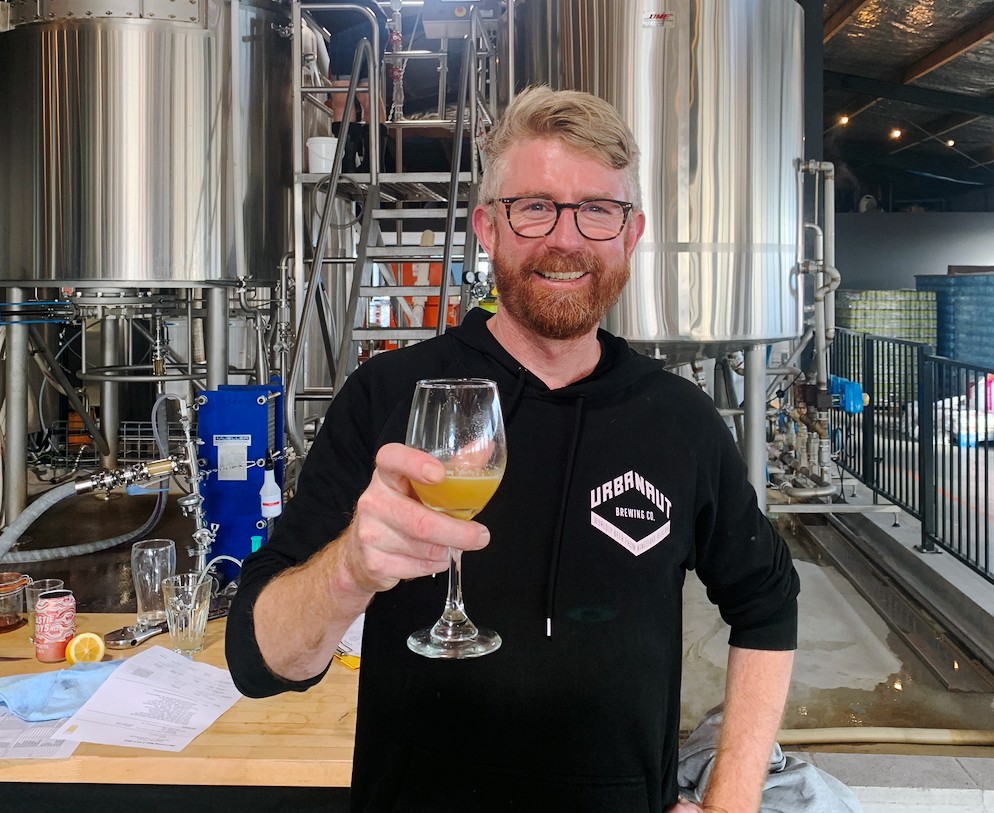
People exposed to high levels of CO2 don’t notice anything is wrong until it’s too late and they lose consciousness.
“When we started Urbanaut, it was on my mind that this is something that is really important and it’s like a silent killer because you don’t see it. And it’s a thing that you should, at the minimum, educate your staff around and, where you can, have monitoring so that you’ve got a bodyguard against the silent killer.
“It was only when I was talking about it with Frans that it re-energised my thinking on the importance of monitoring.
“I talked to staff about it so they understood it and we did some very basic mitigation, which for us is turning off CO2 sources, like bottles or tanks, every night. That way, if there is a leak, it’s not going to fill the room and the first person that comes to work is the unlucky person that doesn’t go home that night.
It’s like a silent killer because you don’t see it.
Bruce Turner on the danger of CO2
“We’re now a tap room within a production site as well and that’s always been a bit of a concern. Not only are we needing to look after our staff, we’ve now got the public coming in unaware of the dangers.
“On weekends, the tap room is open and there are no production staff around, but fermentation is still happening and CO2 is still present in the pipelines and tanks. If anything were to go wrong, the people there wouldn’t necessarily have the training to recognise the risk.
“So once Frans told me about the system, I was very keen — I didn’t realise that I’d been harbouring a concern.”
Urbanaut have six CO2 “sniffers” around the brewery and tap room as well as nitrogen sensors that can tell them is there’s not enough oxygen in a room.”
The installation is the first flagship project from a growing collaboration between New Zealand Beverage Systems (NZBS) and LogiCO2, a Swedish safety technology company specialising in CO2 monitoring solutions.
CO2 is everywhere in a brewery
While most people associate the gas with the fizz in a finished beer, its role in the brewery is far more extensive. During fermentation, tanks naturally release CO2. Additionally, the gas is also used to push beer between tanks, to purge oxygen from the canning line before filling, and to carbonate finished product to the precise level required.
With pipework running to multiple points throughout the brewery, the gas is in constant use.
Every Monday morning, a tanker arrives and connects to bulk storage tanks outside the building. The liquid CO2 passes through a vapour condenser, converting to gas before being piped into the brewery and distributed to the points where it is needed.
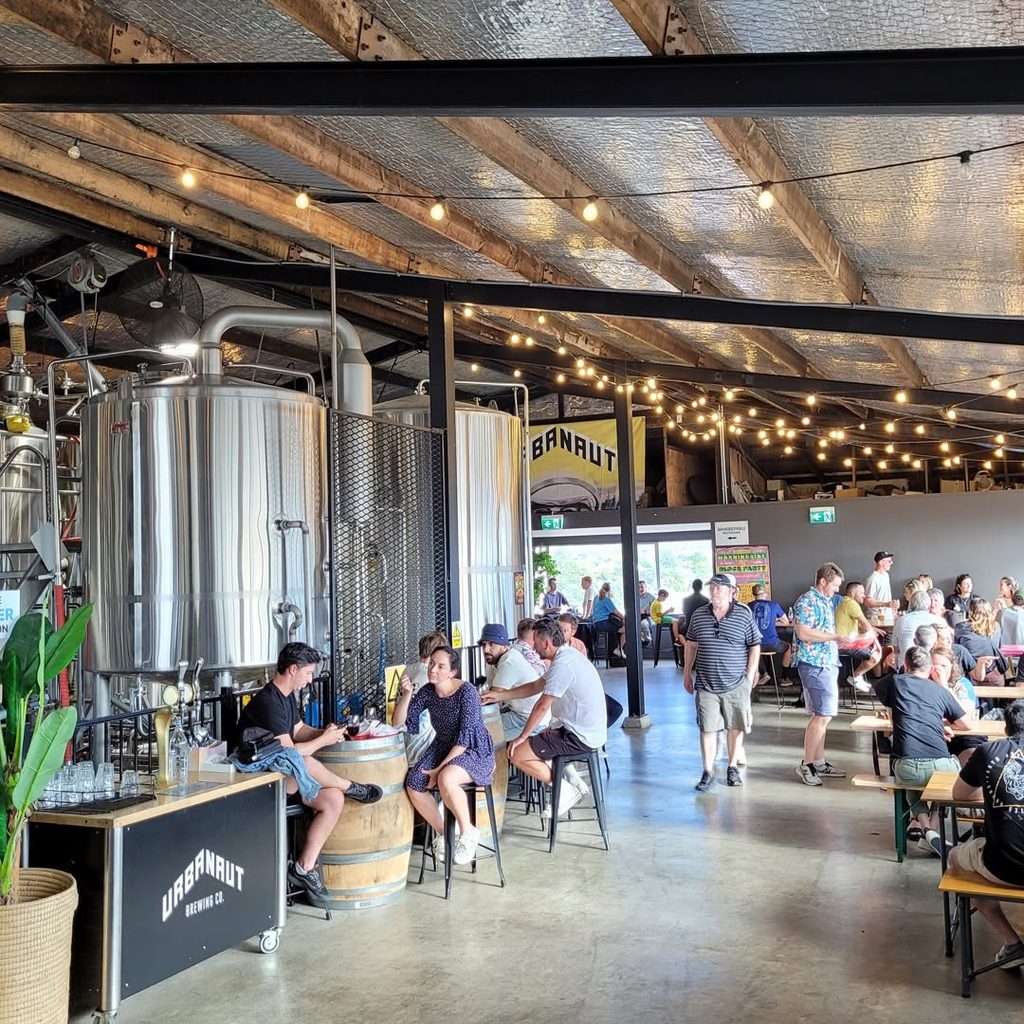
The system was already proving its value during commissioning. When fermentation activity caused CO2 levels to rise one Saturday evening, the tap room manager called Turner to report an unfamiliar beeping. Turner identified the cause remotely, advised the manager to open windows in the affected area as a precaution, and the alarm cleared within minutes. “It was a really good example of the protection and process, and making someone aware that CO2 levels can creep up.”
There are practical benefits beyond safety too. CO2 is an operational cost, and Turner notes that the monitoring data will help the team identify leaks and inefficiencies they would otherwise have no way of detecting.
A Mission with real urgency
New Zealand Beverage Systems (NZBS) works with CO2 every day. As a beverage systems equipment and service provider, the company understands this gas, its applications, and its risks better than most.
It is a mission with real urgency. New Zealand currently does not enforce any legislative requirements for hospitality venues, breweries, or wineries to install CO2 monitoring systems, and awareness of the risks remains low, particularly in the hospitality sector. For NZBS, that is not a reason to wait, but an opportunity to lead.
Formed in March 2023, NZBS was established as the official agent for Hoshizaki Lancer’s equipment supply business across New Zealand and the Pacific Islands. Through its partner company, Independent Cellar Services (ICS), NZBS offers a full suite of beverage dispense services, from system design and equipment supply through to installation, maintenance, and technician training. This puts its team in direct contact with CO2 in confined spaces on a regular basis.
The risks associated with CO2 are well documented. The gas is roughly 1.6 times denser than air, so when a leak occurs, it sinks and accumulates in low-lying and enclosed areas. Because it cannot be seen or smelled, someone could walk directly into a dangerous concentration without any warning. The effects on the human body are severe. At a concentration of 4%, CO2 is classified as an immediate danger to life and health, and at 10%, it can lead to unconsciousness and death.

Brendan Smith, Director of ICS, points out that a cool room locked up since midnight means six hours for even a tiny leak in a gas tube to build into a dangerous situation, with no visible or odour-based warning to alert anyone walking in.
Despite the clear benefits, few venues across New Zealand have a CO2 monitoring system in place. ”There is a real apathy amongst many venues on this issue,” says Smith ”They see it as a cost, not a health and safety benefit.”
While New Zealand’s Health and Safety at Work Act places a general duty of care on businesses to manage confined space risks, there is no specific legislative requirement to install permanent CO2 monitoring systems. WorkSafe NZ, the government body responsible for workplace health and safety, currently focuses its enforcement efforts on four sectors: agriculture, forestry, manufacturing, and construction.
Australia has already moved further, with legislation now requiring any venue using CO2 in a confined space to install an alarm system. Both Smith and Frans Bos, General Manager of
NZBS, believe New Zealand should follow suit, and would welcome government support, such as subsidies, to help smaller operators invest in the right equipment.
“The ultimate goal is every venue in New Zealand that uses CO2 in a confined space has a CO2 alarm,” says Smith. ”We are miles and miles away from that, but that has to be the goal.”