Achieving two decades in craft brewing is a titanic feat for any producer, but few (it could be argued none) have been as formative a presence in the New Zealand industry as Epic Beer.
Epic and its founder Luke Nicholas were not just at the forefront of the glory and tumult of craft, they often defined its very direction. As such the history of Epic Beer and it’s journey through the many epochs of craft brewing, mirrors in large part the course of the industry itself.
I was able to catch up with Luke and dive into some of the early days of Epic (a period soundly before my time drinking beer of any sort) which only further revealed how central their story was to the sector I now so fondly inhabit.
Luke and Epic’s connection to the now massively important (and also simply massive) Steam Brewery is well known, but back then Steam was just the brewing arm of Cock & Bull, supplying beer for the similarly named pub chain (long gone as of 2012). It was here, after a craft beer steeped stint working in America, where Luke first got his hands into commercial brewing.
“I started brewing at the Cock and Bull in 1997 as their assistant brewer, then took over nine months later as head brewer. We started winning some awards including the Supreme Champion Beer of New Zealand at the 1999 inaugural New Zealand Beer Awards.”
The award was important, but the nature of the beer that won it was of even greater consequence. One of Luke’s first creative overtures as head brewer was to re-style one of Cock & Bull’s core range, a Belgian-style beer called Monk’s Habit. His version of Monk’s Habit (and the one entered into the awards) was a hop forward American ale that underwent eight weeks of dry-hopping, a radical practice for commercial brewing back then.
That could have been the start of everything right there, but the Supreme Champion trophy had barely time to find a place on the shelf before Luke dropped the mic and left Cock & Bull a scant few months later, to try and harness the then still largely submerged leviathan of e-commerce.
“I left and started working for a company called RealBeer.com. I was their Australasian Business Development Manager, so I was developing websites. In 2001, the Nasdaq crash happened and all of their staff outside of California were left to their own devices, so I had an e-commerce store but I needed some more revenue, because if you think back there weren’t a lot of people really using e-commerce at that stage. I was probably a little bit ahead of the curve.”
In this instance, ahead proved to be just as bad as behind. The market for buying beer online was just too nascent to support the business. So Luke took back up the mantle of brewing and returned to Cock & Bull, which had continued to expand a chain of pubs and were looking for a solution to their stretched production.
That solution was the current Steam Brewery, built on the site of the old Auckland Breweries plant. As general manager (in addition to head brewer) at Steam, Luke proposed that some of the new brewery’s extra capacity be applied to a new packaged beer, brewed in a more modern hop-forward style with a flash new brand to market it under. Epic was born, and the snowball began to teeter on the slope…
The new beer was slow to take off, and in what must be one of the more cursed decisions in the industry, after 18 months the ownership decided to focus on opening more premises rather than continue investing in developing the Epic range and sold the brand to Luke.
“I proposed to them that I’d buy it off them if I could continue to brew it at Steam and sell it through their pubs, because at that stage 90% of the Epic beer, which was just Epic Pale Ale, was being sold through the Cock & Bull pubs. So that was the arrangement, and yeah…”
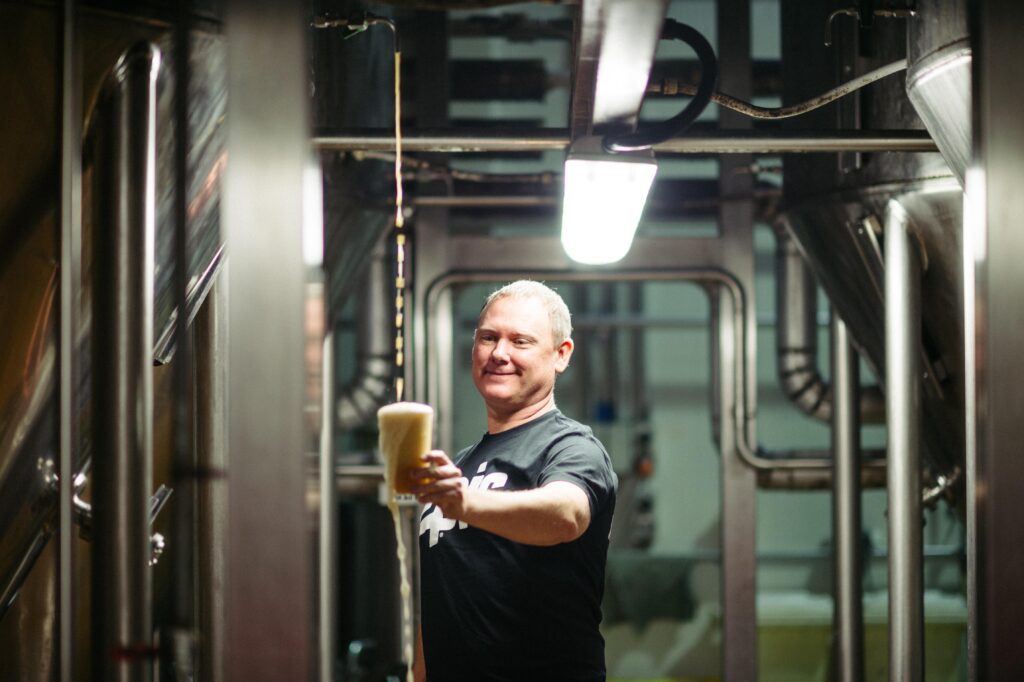
‘And yeah…’ — that phrase carries a unique weight in the Kiwi dialect, but perhaps never more than here. It took a few more years, but Luke believed in his beer, and in his words continued to “brute force” it onto the market. In the waning age of beer-for-blokes ads like Speight’s Southern Man and Carlton Stripe’s L.A.D.S, Epic’s marketing took a more subversive and new-age take. And crucially, it was online, where me and an entire new generation of beer geeks, rather than beer blokes, (and future disposable income goldmines) were hanging out. With its legitimacy cemented by its own supreme champion award in 2006, Epic Pale Ale was officially a thing, and the hop revolution followed in its wake.
While the rest of craft brewing was racing to get a grip on the new hop craze (and literally to get a grip on the crucial American hops), just two years later Epic struck again with Armageddon IPA.
Just as Epic Pale Ale had redefined the style here, Armageddon (true to its name) flattened the former landscape of IPA and rebuilt things in its own image. Despite the beer’s titanic success (an almost unbroken string of trophies from 2009 through to 2016), the creation of Armageddon was more of an exercise of necessity than some master plan. The year had seen a major hop fire in the Yakima valley warehouses destroyed around 4% of the entire supply of American hops, which left smaller buyers like Epic in the dark.
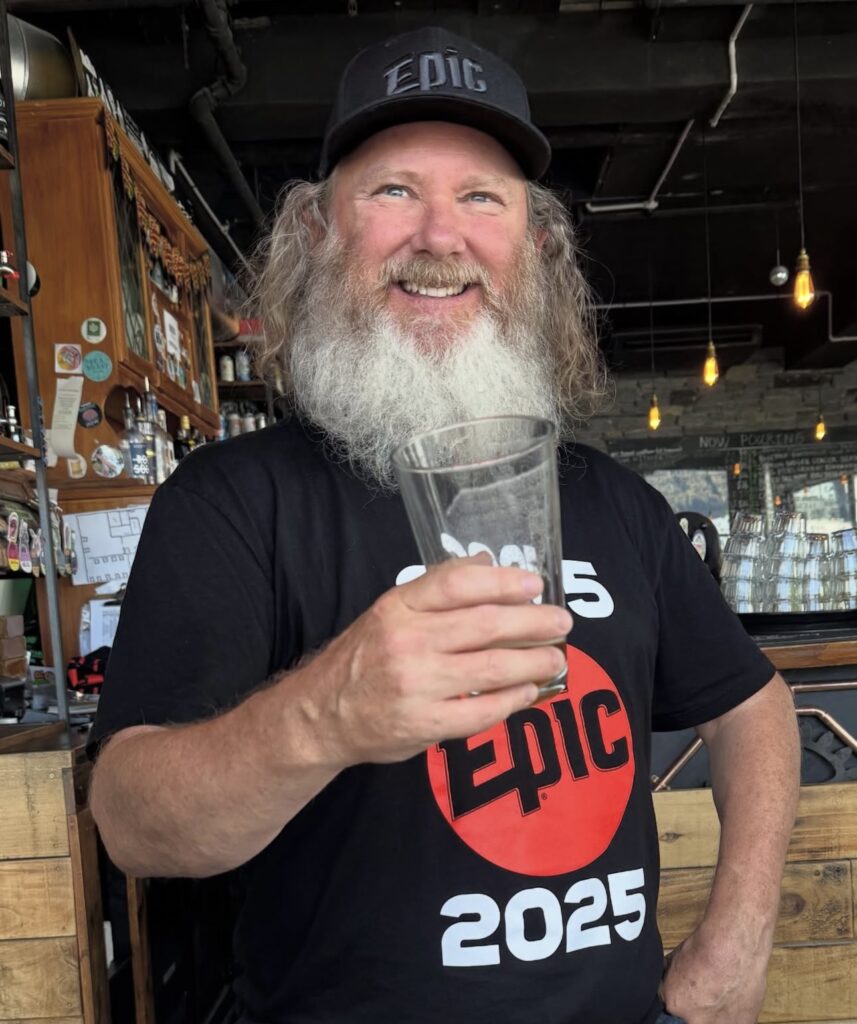
“Everyone’s hop contracts were cancelled until they worked out what was going on and who was going to get what. So I panicked and went ‘okay, I’m going to take all of the hops I’ve got left and make one last beer’, and that’s how the name Armageddon came about. It was basically this mishmash of big, punchy, dank, piney, citrusy hops that I threw into the recipe.”
While that year may not have been an ideal example, Luke’s foresight and commitment to contracting American hops ‘en premier’ (an incredible five years in advance by 2010) was a silver bullet for the brand, allowing them to brew IPA that the competition simply couldn’t.
Epic seemed unbeatable, and as the first decade of the new millennium rolled over, they kind of were. But as American hops became more easily available, other brewers were catching up, and with beers like Liberty’s Knife Party appearing, Epic no longer stood alone as the lords of West Coast IPA.
From there Epic receded somewhat and remained steady until the sudden news in 2023 that the company was in liquidation. It was a turbulent and brutal time when the abject cost of the Covid pandemic was one collapsed business after another, but the fact that a brand as established as Epic could go down so abruptly was still shocking.
Construction firm Russell Group (in partnership with beverages giant Hancock’s) bought the brand, with the strong Hancock’s distribution network providing a perfect platform to get stock moving again. Luke stayed on with the company, production at Steam restarted, and the Onehunga taproom remained open.
While the future is still uncertain, they are seeing growth, recently rising to the ninth best-selling craft beer brand through supermarkets.
While the Epic of today might fairly be called a shadow of their former selves, one should remember that shadow is cast back to the very beginning of craft beer as we know it today. Epic may no longer bear the crown, but they built the throne.
