This is the first in a series dedicated to breweries that have opened up since the Covid-19 pandemic. The past five years have been tough for those in the brewing industry. The data is there: higher costs, lower consumer spend, alternative drinks. All are eating into beer’s share of the beverage market. Despite the doom and gloom a number of breweries have started in the past five years. In this series we visit six from the length and breadth of the country. They are all slightly different but if there was one common denominator it’s that they’re all trying to control their own destiny in one way or another.
Renegade Brewing — Opened April 2025
Self-belief goes a long way when it comes to turning dreams into reality. And Thomas Deverson has self-belief in spades.
Renegade Brewing, run by Thomas and his wife Amy, opened this year in a light industrial part of Sydenham on the southside of Christchurch and when I get Thomas on the phone, it’s just after a chat with his accountant who tells him the brewery is doing very well.
Thomas had a long history in brewing, starting out at Wigram Brewing before moving to the United States when he worked in a variety breweries and distilleries, from a huge 24/7 operation to a small start-up.
On his return to Christchurch, he worked at Three Boys and might have stayed in a wage-earning role had he not found the original Hop Federation brewery for sale at what he described as a great price.
Despite the dire economic situation, Thomas was certain he had the right model for success.
“We don’t need to be distributing. We don’t need to be packaging. We don’t need to be anything more than a really great little local taproom.
“The perspective of the economy wasn’t something I was weighing up. The business model, I believe, will succeed in tough times or in good times.
“If we’re saying the economy is in a slump, when it rises back up, we should be in really good shape because at this moment we are in good shape having started out.”
That model is simple: a brewpub, open four days a week, limited hours, with himself and Amy doing most of the work.
The tight opening hours mean the couple get three days off a week to recharge.
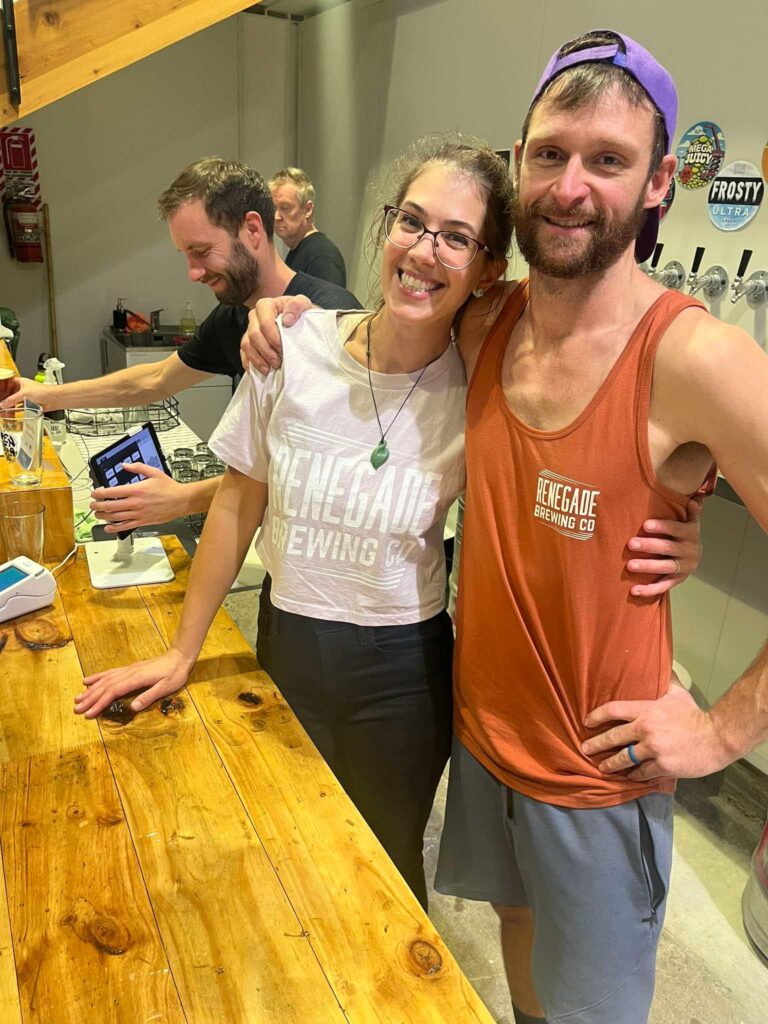
“It’s good value for ourselves and good value for the customers by making it something a bit more special rather than it being like, ‘yeah, you can go there every day of the week from noon to 10 at night’.
“Theoretically that gives us three other days to either have a life or to catch up on everything else that needs doing.”
The brewpub model, he says, is the way to go “because you are making the beer yourself and selling it at the full retail, and you are getting immediate payment from the customer.
“The other important things about that brewpub model that I really like is that you get the direct feedback.
“And as we’re doing everything ourselves, we’re getting direct feedback from across the bar from the customer who’s buying the beer from me or my wife.
“What we’ve seen is certain beer trends that we didn’t necessarily expect. For example, our milkshake IPAs have just been going crazy. People can’t get enough of them so we make another one, and then they go crazier. So that’s an easy business decision to make.
What we’ve seen is certain beer trends that we didn’t necessarily expect. For example, our milkshake IPAs have just been going crazy. People can’t get enough of them so we make another one, and then they go crazier. So that’s an easy business decision to make.
Thomas Deverson
“We are able to continue giving the customer what they want. There’s no disconnect which can can happen when you’re a brewer stuck in the back of your brewery, thinking this is beer perfection, when you’re brewing a Belgian Tripel or something else that you think is God’s gift to beer. That’s all well and good, your beliefs as a brewer, but what is the commercial retail value on that?”
The flipside is learning that beers he was told wouldn’t work, do in fact, work.
“I’d wanted to brew a black IPA for years, but I’ve had so many people tell me it’s a dead style and I won’t be able to sell it. We had no problem selling that beer across the bar. People loved it.
“I had one older woman come in and try it and she like, ‘Thomas, I would never have drunk a dark beer before coming across this’. And now she’ll sit there, and she’ll order a stout. And we’ve been able to nurture relationships like that from other small things that we’ve done, like having an American-style bar where you can sit at the bar.”
Thomas has nod to the mainstream drinker with his Frosty Ultra Lager which is unashamedly tapping into what some people think beer should be.
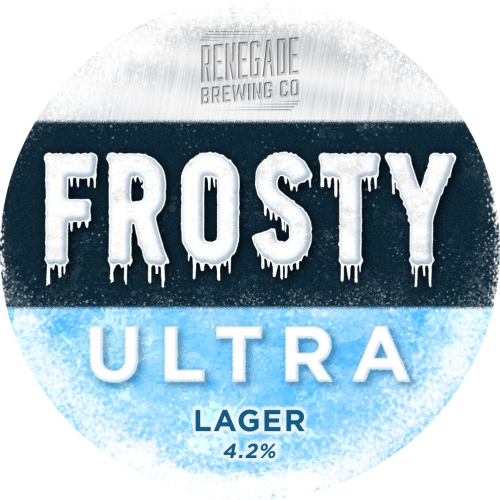
“It doesn’t need to do anything more than just be cold and refreshing. I particularly like the fact that we sort of stole the mainstream branding, being the Ultra tagline and that styling so if a mainstream beer drinker walks into our bar, they very much are at home and feel safe and are very happy with that beer.
“When I look across that spectrum of the taps, there needs to one of every kind of beer. There’s no point in having four hazy IPAs that all fall into that hazy, hoppy realm.”
The build up to Renegade
After starting at Wigram, Thomas and Amy moved America for a stint.
“I worked at a large craft brewery over there in Connecticut called Two Roads. We’re talking a serious facility that runs 24-7.
“It was a good step to go from homebrewing to Wigram and then take that experience into a truly commercial scale in terms of having a lab for testing and a full sensory programme.”
They then headed to Colorado where he ended up at Breckenridge Distillery. It was in Colorado he met a pair of aspiring brewers.
“Near the end of the ski season, I met these guys that were starting a small brew pub — I coincidentally bumped into them at a taproom in Buena Vista, at the original Eddyline, actually.
“I told them I was a brewer from New Zealand and asked if I could come down and see what they had going on. And lo and behold, they were in over their heads. And I said, ‘oh, just give me a shout if you need any help’.
“This was in this small mountain town and I was taking a little walk around this town and next minute, they’re running down the street, shouting ‘Thomas, Thomas’.
“And they’re like, ‘can you come help us with this?’. I helped them for the next three months build the brewery.”
That experience drove “little bits of inspiration” that would eventually turn up at Renegade.
He furthered his beer education as production manager at Three Boys.
Why start now?
“Just before our daughter was born I felt I’d achieved all that I could with Three Boys and I was wondering, ‘what’s next?’.
“Most advice I kept getting from people was if you enjoy what you’re doing, and you’re getting paid, just stay where you are. Don’t start your own brewery.”
That all changed when saw the old Hop Federation equipment for sale. That was the Monkey Wizard brewery that Hop Federation started out on before buying Deep Creek’s original brewery.
“I came across the equipment for sale just on Trade Me and I thought, ‘well, this is what you need’. I ended up getting what I believe is a really scorching deal on the equipment, especially when it all turned up and it was pumps, hoses, valves — everything there for a really good price.
“It took a long time trying to work out what we were going to do with this stuff and I was happy to hold on to it for a wee while.”
In the meantime Thomas knew he needed a business partner.
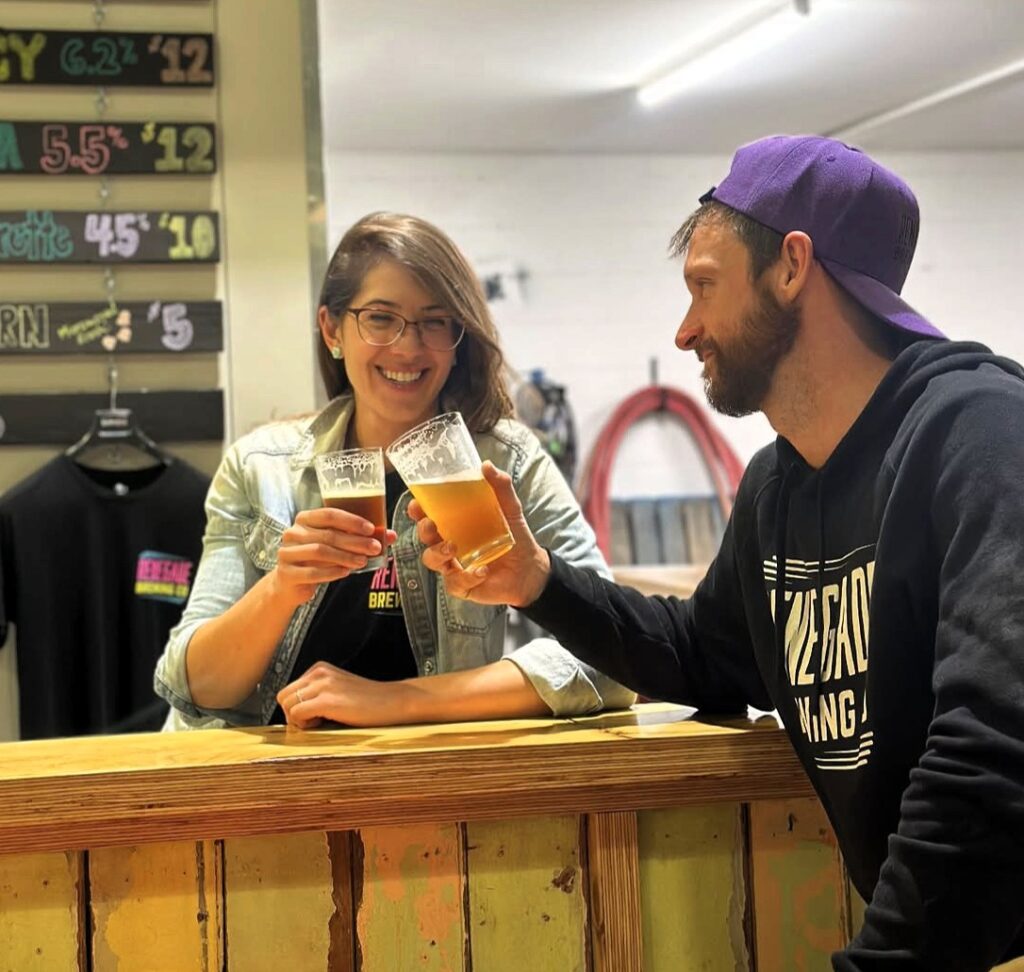
“I can brew beer, but I can’t manage a business. So I was trying to find someone to do it with. I’d come across people, and they would seem suitable but each time it seemed like I was going to have to secede too much of my dream.”
He had his model set and was determined there would be no distribution, no retail — and he wouldn’t budge on that.
“I was very specific about what I wanted and it wasn’t negotiable from what I’d seen in 10 years of working in the beer industry, if it was outside of these very narrow parameters that I was setting, it wasn’t a good business model.
“In the end, after many discussions, my wife just came to me and said, how about I be your business partner? How about we do it together?
“And that was the bloody best decision we ever made because we have full control of the vision. Sometimes Amy asks, ‘why is that important?’ I just say ‘because it is’.
“Amy’s brought great skills — organisational, administrative, taproom management, design, and just a fantastic personality. And all these things have just complemented the business profile.”
Amy still works one day a week as a teacher and Thomas does work long hours when he’s there, but he’s adamant he’s on the right path.
“I’m pulling my hair out sometimes, but I just keep falling back on those values I picked up somewhere. that I’ve just got to work hard and we’ve just got to do it.
“I was riding my bike home from the brewery at 11.30 the other night into this crazy wind and I was just like, ‘keep powering on, Thomas, just keep doing your thing’.”
The location
Initially he was keen to be on the east side of Christchurch, near the new stadium — “and we live on the east side out near the beach so there’s that proximity and I love the east-side brand, but I didn’t come across anything suitable. When we did find the location in Sydenham we immediately walked in and we were like, ‘yeah, this is it’.”
Thomas did a lot of the fitout himself.
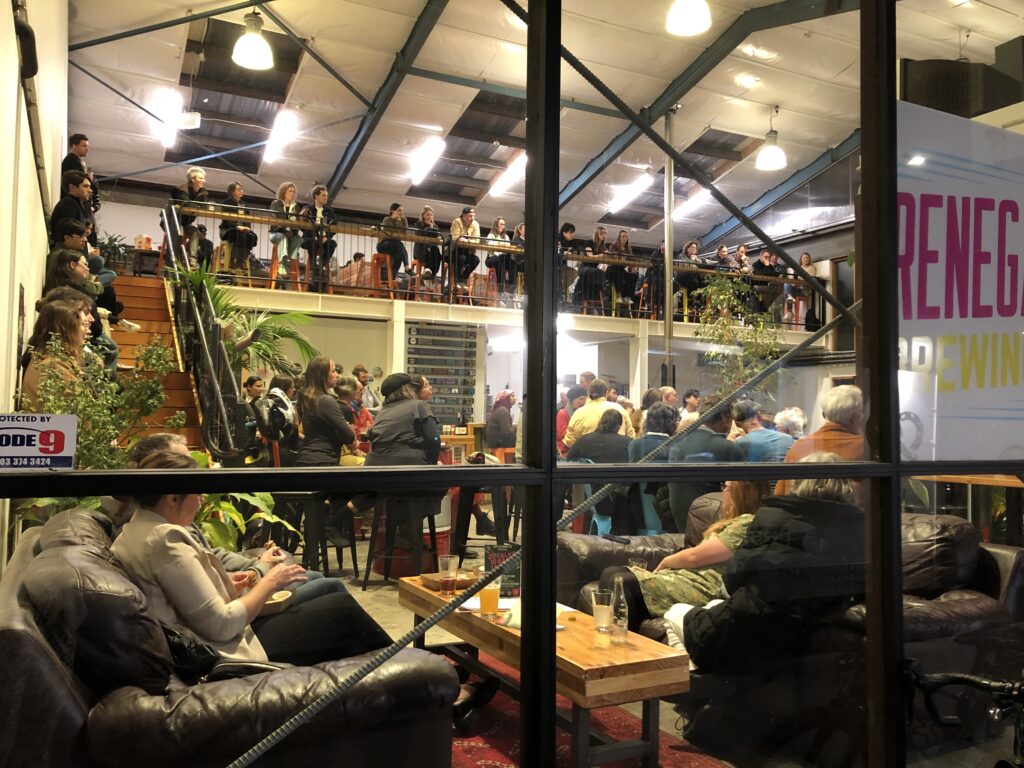
“I really enjoy the pleasure of DIY at home or working on my car or bikes and I wanted to utilise, and build on. my skills like welding and woodworking.
“One reason was to try save some money and I also wanted to let the vision evolve because I tend to work on things and that’s how they come together. Now I look at it and it’s just amazing. We’ve produced something really, nice, really genuine, I think.”
He’s trying to make the beer pricing an important part of the offering, with the lager just $10.
“That was another core value. Some people say ‘I think your beer pricing is too cheap’, but I believe people are going to be drinking more beer. They might have three beers rather than two, or two rather than one, because of the pricing. And we can justify the margin.”
No regrets
But let’s cut to the chase. Any regrets?
Actually, I already know the answer.
“Amy was saying, ‘Thomas, make sure you don’t come across too arrogant’. And I’ve definitely been called that not once or twice, but more than that. And I like to rephrase it into confidence. And I was very confident in the business model.
“I knew what we needed to do. And in all fairness, we have done all that we said we were going to do and we’ve probably done it better.”